Best Disc Golf Accessories of 2026
Once you've got discs, a bag, and decent shoes, the rest of disc golf gear falls into "accessories" - small items that don't show up in the highlight reels but quietly make every round more comfortable, more organized, and less expensive in the long run. None of these are required to play, but each one solves a real problem most players run into within their first few rounds.
Here are the accessories we think are actually worth the money, roughly in the order we'd recommend picking them up.
Top Picks at a Glance
- Best Grip Upgrade Disc Golf Glove ~$20 Check Price →
- Best for TournamentsMini Marker Set ~$20 Check Price →
- Best for Wet RoundsMicrofiber Disc Golf Towel ~$15 Check Price →
- Best Disc Saver Disc Retriever Tool ~$35 Check Price →
- Best for Course ManagementGolf Rangefinder ~$93 Check Price →
- Best Stocking StufferMVP Lunar Module Basket Light ~$13 Check Price →
- Best for Sweaty Hands Birdie Bag ~$10 Check Price →
- Best for Sun Glare goodr OG Sunglasses ~$30 Check Price →
- Best for Putting Practice ChampCap Putting Target ~$39 Check Price →
- Best for Disc Storage HIAARO Disc Golf Storage Rack ~$80 Check Price →
- Best for Disc Repair Disc Doctor Repair Tool ~$16 Check Price →
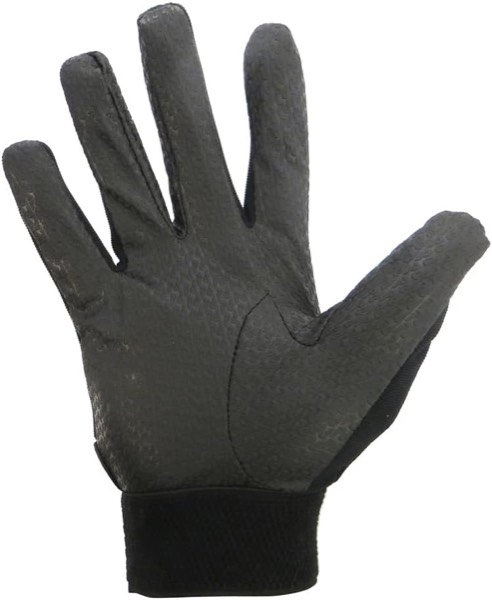
A snug, grippy glove on your throwing hand can make a noticeable difference in wet, humid, or cold conditions when sweat and moisture make plastic feel slick. Most disc golf gloves are designed with a textured palm for tackiness and breathable backs so your hand doesn't overheat mid-round. If your throws get inconsistent as soon as your hands get damp, this is a cheap fix.
Pros
- Improves grip in wet/humid conditions
- Reduces blisters on high-volume practice days
- Inexpensive, long-lasting
Cons
- Takes a round or two to get used to the feel
- Sizing varies by brand - check measurements
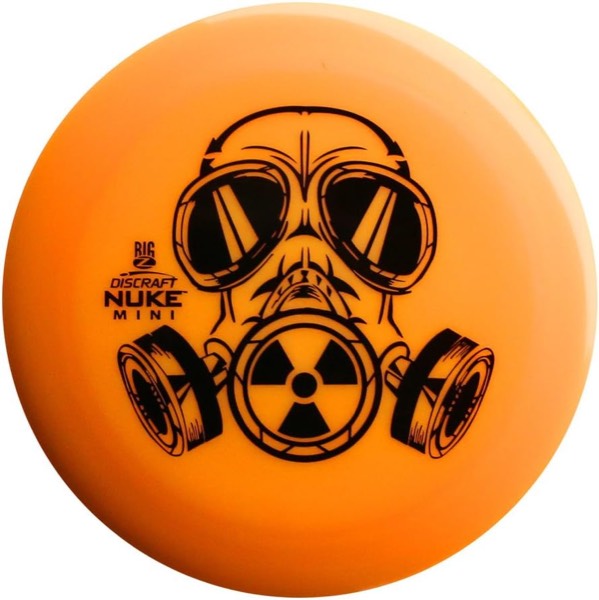
A mini marker disc is used to mark your lie after a throw instead of leaving your full-size disc on the ground - required at most clubs, leagues, and tournaments, and good etiquette even in casual rounds. A set of a few minis means you're never stuck searching your bag mid-hole, and they're small enough to clip to a bag strap or keep in a pocket.
Pros
- Required for most sanctioned events
- Frees up your good discs to keep throwing
- Cheap, durable, easy to keep on hand
Cons
- Easy to lose in tall grass or leaves
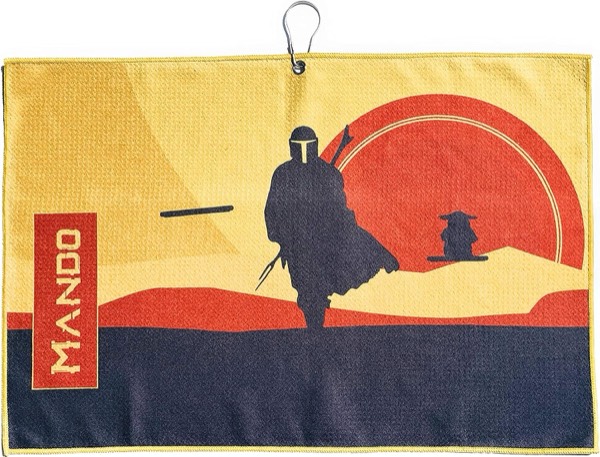
Wet grass, morning dew, and rinsing discs after they roll through mud all add up to wet discs - and a wet disc is a slippery, unpredictable disc. A quick-drying microfiber towel clipped to your bag lets you wipe down your disc before every throw, which matters far more for grip and accuracy than most new players expect.
Pros
- Keeps grip consistent in wet conditions
- Dries faster than cotton towels
- Clips easily to most bags
Cons
- Needs occasional washing to stay effective
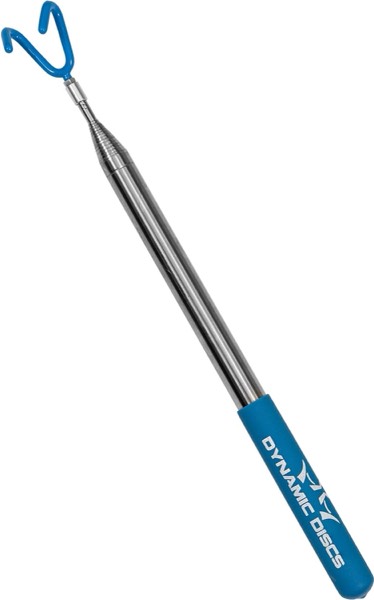
Every course has at least one hole with water, thick brush, or a steep drop-off that eats discs. A telescoping retriever with a hooked or basket end lets you pull discs back from places you'd otherwise need waders (or a new disc) to reach. If you play a course with any water hazards regularly, this pays for itself the first time it saves a favorite disc.
Pros
- Recovers discs from water, mud, and brush
- Telescoping designs collapse small for your bag
- Pays for itself by saving premium plastic discs
Cons
- Adds bulk/weight to your bag
- Mainly useful on courses with water or deep rough
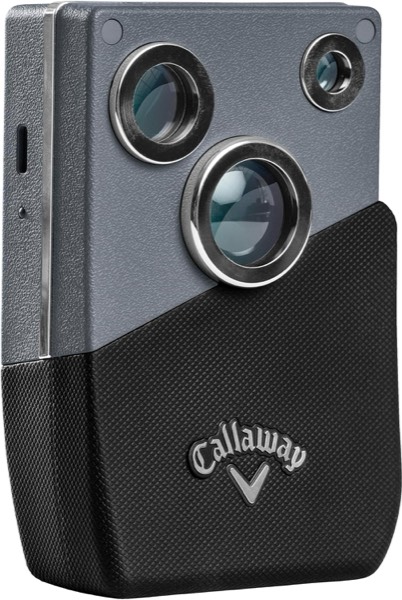
A laser rangefinder built for ball golf works perfectly well for disc golf and takes the guesswork out of distance. Knowing you're 320 feet from the basket instead of "somewhere between 300 and 400" helps you pick the right disc for the shot - especially useful as you start carrying more discs with different maximum distances.
Pros
- Accurate distances remove guesswork
- Helps you learn your real throwing distances over time
- Works for both disc golf and ball golf
Cons
- Most expensive accessory on this list
- Overkill for casual, scenic-route rounds
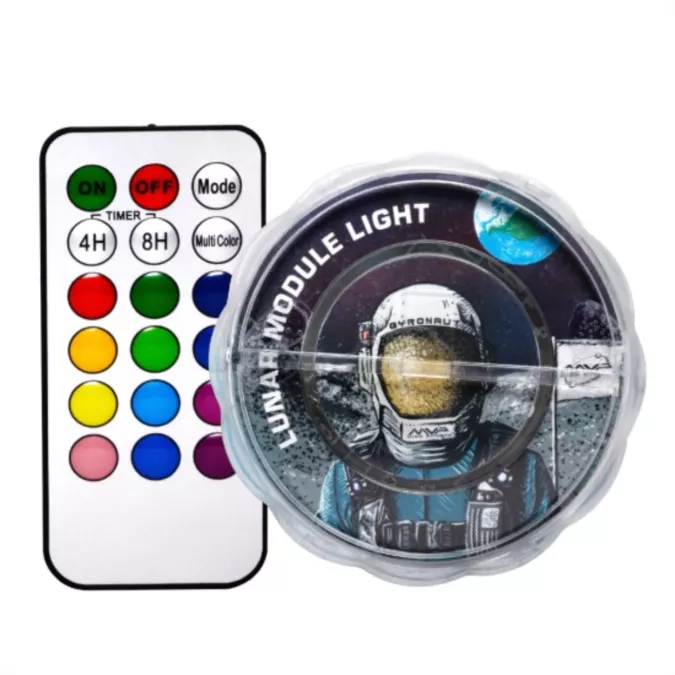
A backyard putting session doesn't have to end when the sun goes down. The Lunar Module is a compact, remote-controlled LED puck that straps onto a basket's chain bars and floods the target with color, so glow rounds and after-dark practice sessions are actually visible. It auto-cycles through a dozen-plus colors and has 4-hour and 8-hour auto-off timers, a nice touch if you tend to forget it's running.
Pros
- Turns any basket into a lit-up target for night and glow rounds
- Remote control switches colors and modes from a few feet away
- Straps on in seconds, no tools needed
- Built-in 4hr/8hr timers shut it off automatically
Cons
- Runs on 3 AAA batteries; some users report shorter battery life than expected
- A few reports of the remote's range or the mount loosening over time
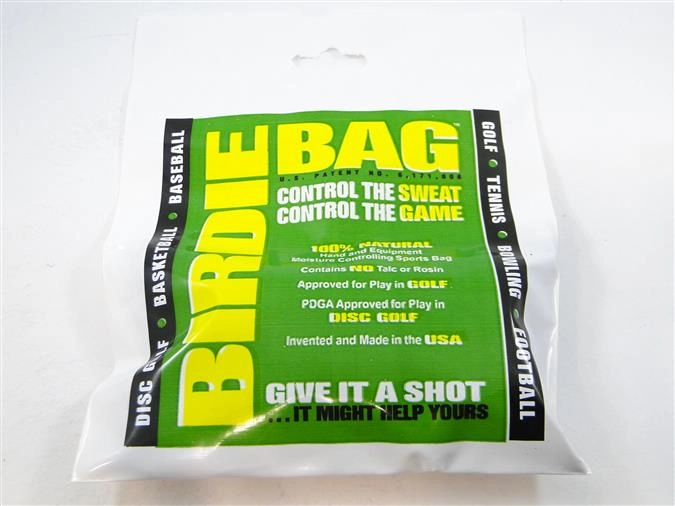
The Birdie Bag is a palm-sized pouch of kiln-dried wood powder that has been a staple in pro bags since 1996. A quick pat on your hands or your disc absorbs sweat and oils without the sticky residue chalk and rosin leave behind, so grip stays consistent from the first tee to the last putt. It contains no talc or rosin and is PDGA-approved for tournament play.
Pros
- Dries hands fast without a sticky chalk or rosin residue
- 100% natural kiln-dried wood, no talc or rosin
- PDGA-approved and trusted by touring pros since 1996
- Large size lasts a full season of regular rounds
Cons
- Fine wood powder can dust nearby gear if the bag isn't sealed
- Heavy sweaters may need to reapply every few holes
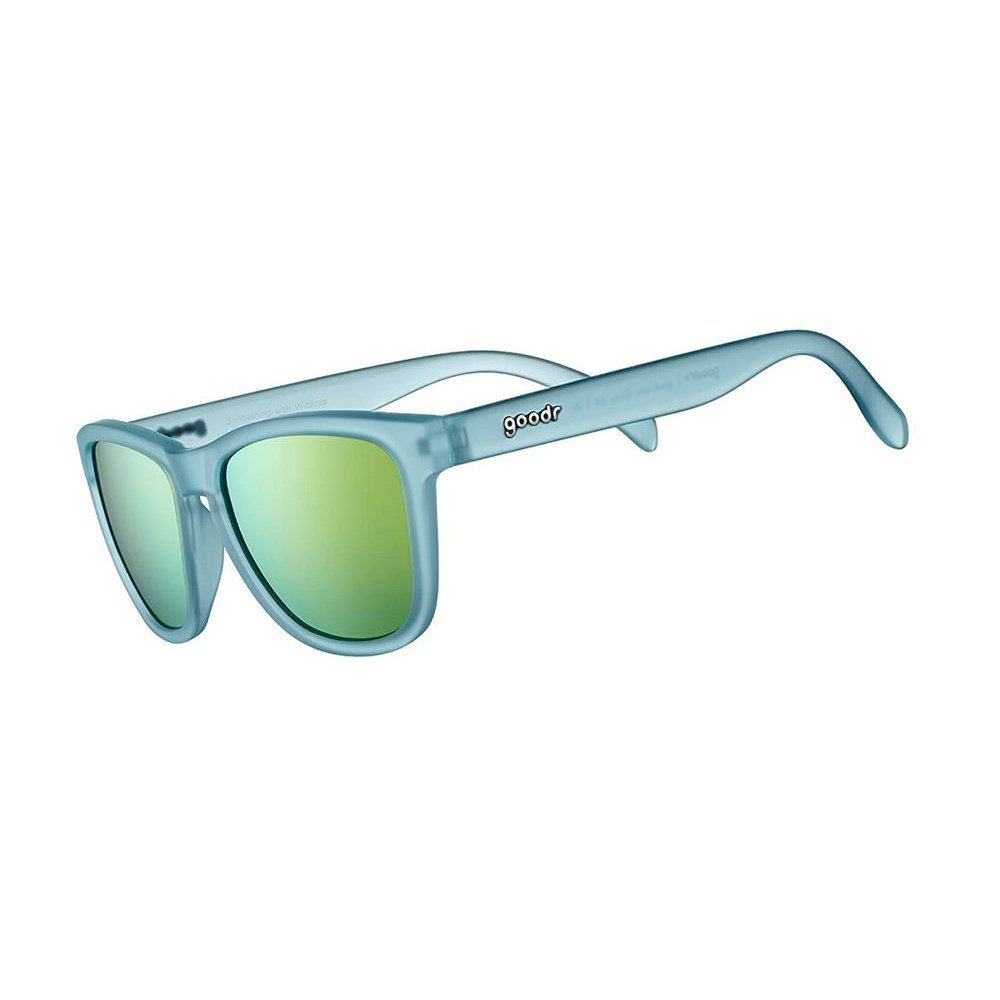
Tracking a disc against a bright midday sky is a lot easier when you're not squinting through glare. The goodr OG is a no-slip, no-bounce polarized sunglass built for running and other sweaty sports, which happens to make it a great fit for a full disc golf round too - it stays put through your run-up and follow-through instead of sliding down your nose or bouncing off with every step.
Pros
- No-slip grip coating and silicone nose pads keep them locked in through your release
- Polarized, UV400 lenses cut glare so it's easier to pick up your disc against the sky
- Snug, lightweight frame doesn't bounce during the drive or follow-through
- Dozens of color and lens combinations, most under $30
Cons
- One frame size - can feel snug if you have a larger head
- Lens tint is fixed per pair, so you can't swap lenses for changing light
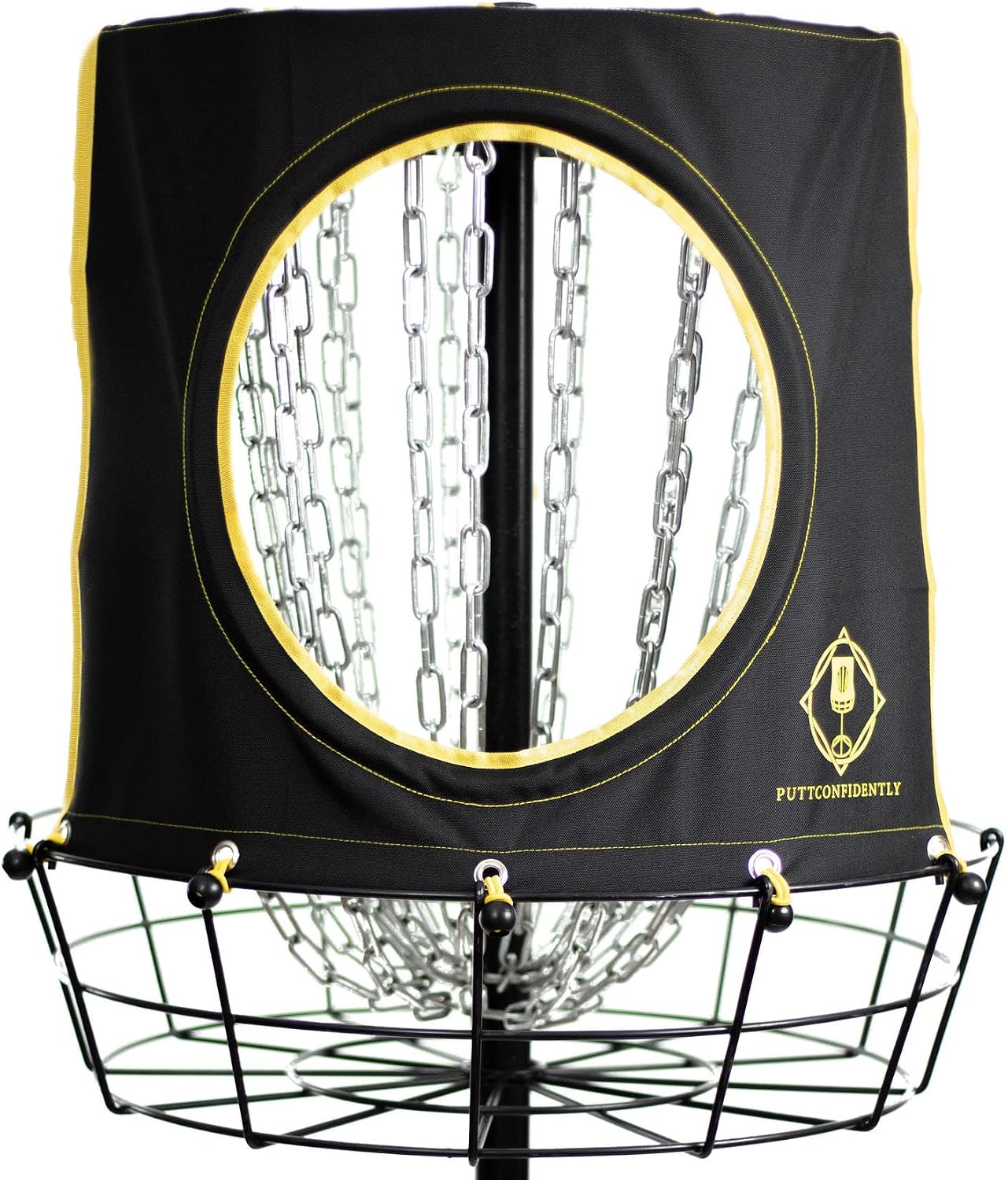
The ChampCap is a fitted cover that stretches over your home basket and shrinks the catch area down to a 13-inch opening, cutting your realistic catch points roughly in third. Instead of getting away with lazy putts that clip the edge of the chains, you're forced to actually hit the middle every time - which is exactly the habit you want before you're standing over a putt that counts on the course.
Pros
- Shrinks the target so only center-hit putts count as makes
- No tools needed - stretches on and off in seconds
- Durable 1000D Cordura fabric holds up to daily practice sessions
- Builds the same muscle memory pros use for tournament-tight putts
Cons
- You need a basket at home already; this doesn't replace one
- Sized for standard baskets, so double check your basket's rim before buying
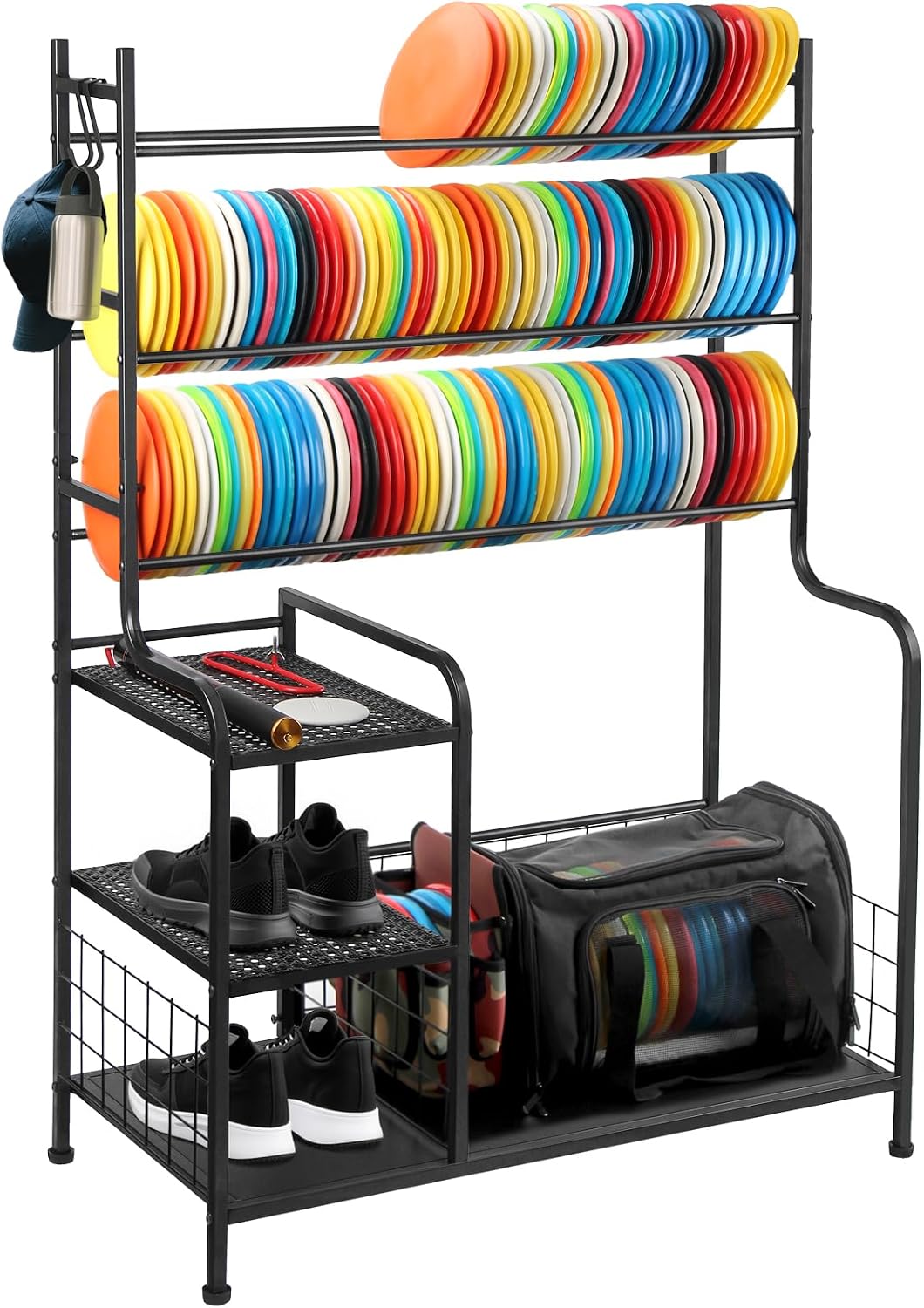
Once a disc collection crosses a couple dozen molds, milk crates and closet floors stop cutting it. This all-metal rack holds 140+ discs across three angled tiers, with two lower shelves and side hooks for shoes, a bag, and a hat, so an entire disc golf setup lives in one spot instead of scattered across the garage.
Pros
- Holds 140+ discs across three tiers, plenty for a growing collection
- Sturdy all-metal build, each tier rated to hold 27 lbs
- Lower shelves and hooks store shoes, bags, and a hat too
- Adjustable leveling feet keep it stable on uneven garage floors
Cons
- Assembly required, and the metal rails let discs clatter if you don't add padding between rows
- Large footprint (about 35" wide, 50" tall) needs real floor space
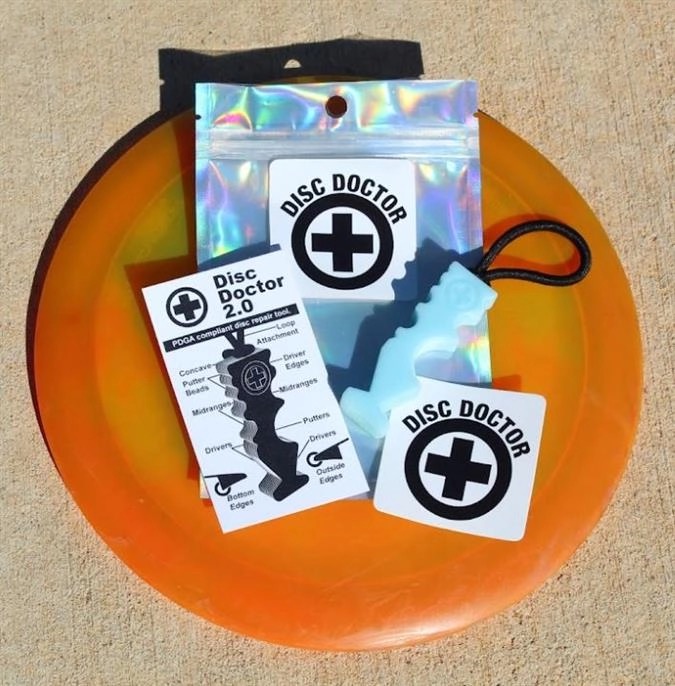
Every disc that clips a tree or skips across pavement picks up scuffs and burrs along its rim, and those rough spots quietly mess with flight consistency over time. The Disc Doctor is a PDGA-compliant repair tool with grooves cut for the inside and outside rims of putters, midranges, and drivers, so a few passes smooths the plastic back toward its original profile instead of throwing a damaged disc away.
Pros
- PDGA-compliant mild sanding, safe for tournament discs
- Grooved edges fit putters, midranges, and drivers from any brand
- Loop attachment clips straight to a bag or key ring
- Extends the life of premium plastic instead of replacing scuffed discs
Cons
- Smooths minor scuffs and burrs only, won't fix cracks or deep gouges
- Takes a few tries to get an even pass around the whole rim
What to Buy First
If you're prioritizing, start with a mini marker set - it's the cheapest item here and the only one that's actually required at most organized play. From there, a towel and glove are the next-best value for improving your actual throws. A disc retriever and rangefinder are bigger purchases worth waiting on until you know your home course well enough to know if they'll get used.
Frequently Asked Questions
Do I need any of these accessories to start playing?
No. Discs, and eventually a bag, are the only true essentials - see our Beginner's Guide for the full breakdown. Accessories are quality-of-life upgrades you can add over time.
Are mini markers really required?
For casual rounds, no - but it's good etiquette to mark your lie rather than leaving a full-size disc on the fairway. For leagues, clubs, and PDGA-sanctioned events, a mini marker (or approved alternative) is typically required.
Is a disc golf-specific glove different from a regular golf glove?
Disc golf gloves are usually designed for a fuller-hand grip on a flat disc rather than a club handle, with textured palm patterns for tackiness. A ball golf glove can work in a pinch, but a disc golf-specific glove will generally feel better for the actual throwing motion.