Innova Aviar3 Review: The Flat-Top Driving Putter
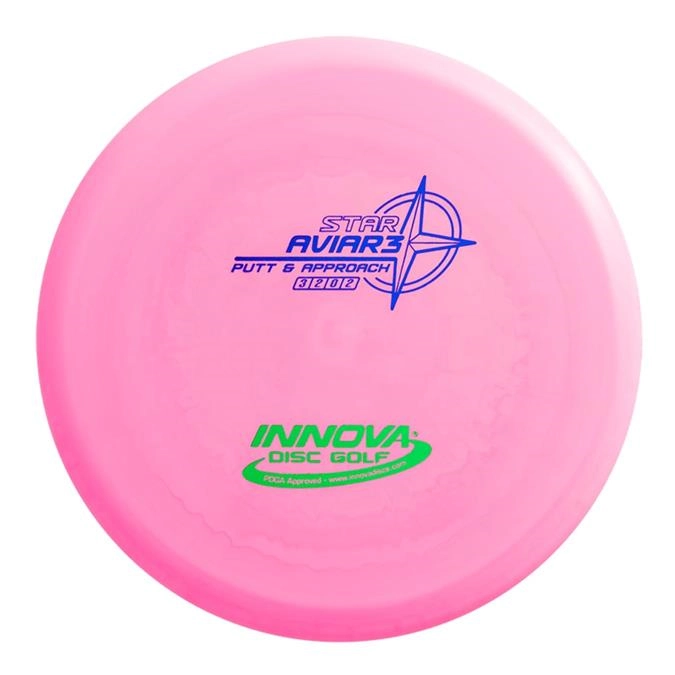
The Innova Aviar3 takes Innova's best-selling putter and flattens the top, turning it into a Speed 3 driving putter with less glide and more fade than the original. The 3/2/0/2 flight numbers describe a disc that gets off the hand quickly, holds a tighter line, and finishes with a firmer left fade than the classic Aviar, making it a favorite for controlled tee shots on short holes and aggressive upshots into the wind.
This review covers the Aviar3's 3/2/0/2 flight in detail, who benefits most from throwing it, how the DX, Star, Champion, and XT plastics differ, and how it compares to two putters already covered on this site, the Innova Aviar and the Discraft Luna.
Innova Aviar3 - Quick Specs
- Flight Numbers 3 / 2 / 0 / 2 (Speed / Glide / Turn / Fade)
- Disc Type Putter
- Stability Overstable (more overstable than the standard Aviar)
- Weight Range 160g-175g (173-175g is the standard driving-putter weight)
- Plastics DX, Star, Champion, XT
- Approx. Price $13-19 depending on plastic
- Best For Intermediate to advanced players who want a flatter driving putter; solid headwind option for any skill level
Who Should Throw the Innova Aviar3?
The flat top and reduced glide make the Aviar3 a more purpose-built disc than the original Aviar. It rewards players who want predictability over float.
- Beginners: Usable, but the Fade 2 finish means it will hook left harder than a neutral putter if thrown too slowly. Beginners often get more mileage out of the standard Aviar first, then add the Aviar3 once they want a firmer, more controlled putt for windy days.
- Intermediate players: This is the Aviar3's home turf. Its low glide keeps drives from ballooning on short holes, and the reliable fade makes it a go-to disc for hyzer approach shots and controlled putts from inside the circle.
- Advanced/professional players: A dependable headwind putter and a common choice for tee shots under 300 feet where accuracy matters more than distance. Many advanced players carry it specifically as a driving putter separate from their putting-only disc.
New to reading flight numbers like these? The flight numbers guide breaks down what each of the four numbers actually controls in the air.
How the Innova Aviar3 Flies
The 3/2/0/2 flight numbers describe an overstable putter with a quick, direct flight. The Speed 3 rim is only slightly faster than the Aviar's Speed 2, but the drop from Glide 3 to Glide 2 is the number that defines this disc: it doesn't hang in the air the way the original Aviar does, so it comes down sooner and holds its line better in crosswinds. The 0 turn means no flip at high speed, and the Fade 2 brings a firmer, more predictable finish left for a right-hand backhand thrower than the Aviar's gentle Fade 1.
Thrown flat, the Aviar3 tracks straight before dropping into its left fade near the end of the flight, which makes it easy to read on approach shots. On a hyzer release, that fade compounds quickly for a shorter, more direct line into the basket. It resists turning over even on a flat, hard throw, so this is not the disc for players hoping to flex a putter into a turnover shot, that job belongs to something like a more understable disc.
In headwinds, the Aviar3's lower glide and extra fade are an asset: it holds its line instead of floating and drifting off target the way a higher-glide putter can. On calm days for shorter putts, the firmer fade means players need to account for slightly more break than they would with a neutral putter like the Aviar or the Dynamic Discs Judge.
Innova Aviar3 Plastics Compared
Innova makes the Aviar3 in four common plastic blends, and the choice affects both grip and how much the disc's already-overstable numbers soften with wear.
- DX Plastic: The base blend. Soft, grippy, and affordable. Beats in fastest, which actually works in the Aviar3's favor since it becomes more neutral and easier to control over time. Around $13-15.
- Star Plastic: Innova's premium grippy blend. Durable, consistent grip in wet and dry conditions, and holds the disc's overstable flight numbers longer than DX. The best all-around choice for a driving putter that flies the same way every round. Around $17-19.
- Champion Plastic: Hard, clear, and the most durable option, with a firmer, slightly more overstable feel than Star. Some players find it slippery in the rain, but it holds its flight numbers the longest of any Aviar3 plastic. Around $16-18.
- XT Plastic: A blend between base and premium, offering better grip than Champion with more durability than DX. A solid middle-ground choice if you're unsure which tier to start with. Around $14-16.
Recommendation: start with Star if you want consistent flight from day one, or DX if you want the disc to beat in toward a more neutral, all-purpose putter over your first season.
Pros
- Firm, predictable fade that holds up well in headwinds and crosswinds
- Low glide keeps drives from ballooning on short, tight holes
- Reliable driving putter for tee shots under 300 feet
- DX plastic beats in toward a more neutral, versatile flight over time
- Same trusted Aviar shape and rim feel that players already know
Cons
- Less forgiving than the standard Aviar for slow arm speeds and true beginners
- Lower glide means less hang time on long putts than the original Aviar
- Not a good choice for turnover shots or rollers
Similar Discs to Consider
If the Aviar3 isn't quite the right fit, here are two natural alternatives already covered on this site:
- Innova Aviar - The original, more neutral version with higher glide (3 vs 2) and a softer Fade 1 finish. The better choice for a primary putting disc or for beginners still developing touch; the Aviar3 is the better choice once you want a firmer, more direct driving putter.
- Discraft Luna - A Speed 3 putter with even more fade (3 vs 2) and Paul McBeth's signature stamp. A good next step for players who want maximum wind resistance and don't mind an even sharper finishing hook than the Aviar3 offers.
Frequently Asked Questions
How is the Innova Aviar3 different from the standard Aviar?
The Aviar3 has a flatter top, one less point of glide (2 vs 3), and one more point of fade (2 vs 1) than the standard Aviar. In practice that means it flies faster off the hand, hangs in the air less, and finishes with a firmer left fade, making it a more direct driving putter rather than a soft, floaty putting disc.
Is the Innova Aviar3 good for beginners?
It's usable but not the easiest starting point. The Fade 2 finish will hook left more aggressively than a neutral putter if thrown with a slow arm speed. Most beginners get more consistent results starting with the standard Aviar or a neutral putter like the Dynamic Discs Judge, then adding the Aviar3 later for windy-day rounds.
What is the best plastic for the Innova Aviar3?
Star plastic is the best all-around choice for consistent grip and flight retention. Champion holds its overstable flight numbers the longest but can feel slippery when wet. DX is the most affordable option and actually beats in toward a more neutral, versatile flight over a season of use.