Discmania FD Review: The Straight-Flying Fairway Driver Standard
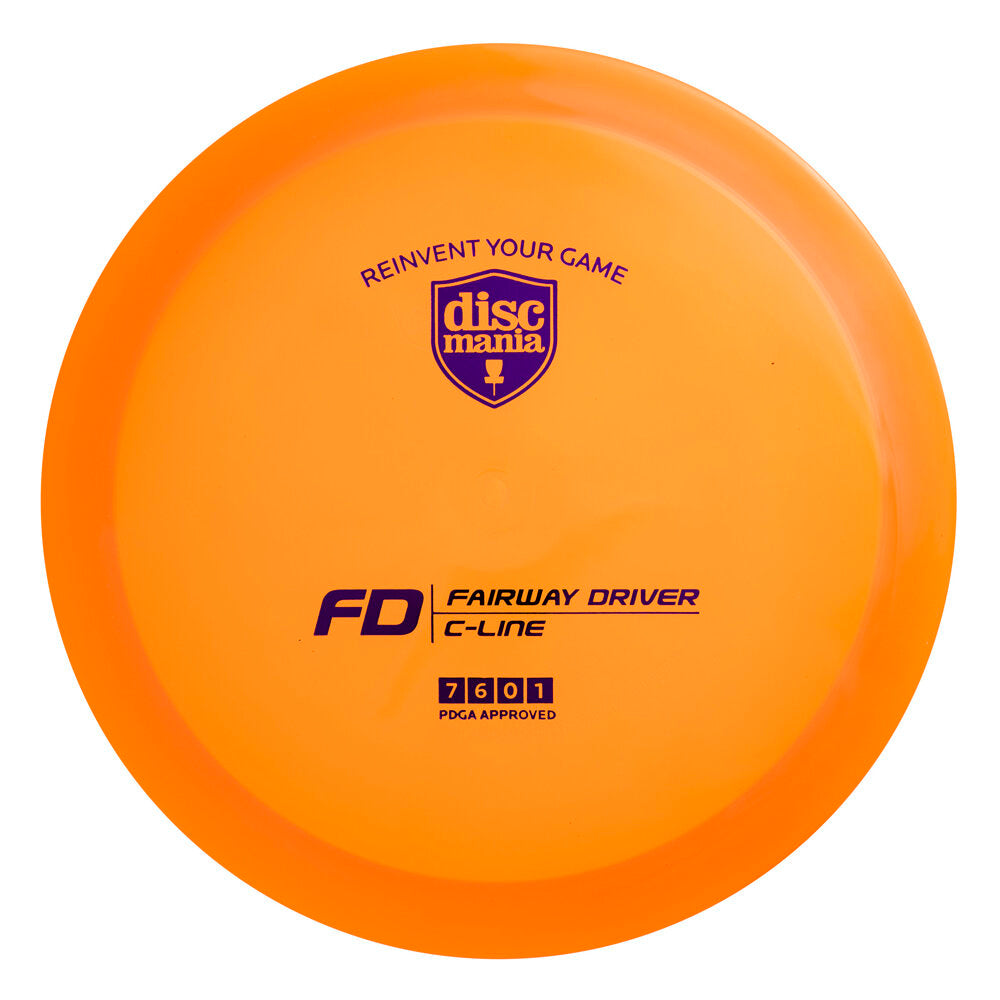
The Discmania FD (7/6/0/1) was Discmania's first fairway driver and remains one of the best-selling discs the brand has ever released. It built its reputation on a simple promise: point it at a gap, throw it flat, and it flies straight. Unlike understable fairway drivers such as the Latitude 64 River that need extra turn to travel far, or overstable workhorses like the Innova Teebird that fade hard at the end, the FD sits almost exactly in the middle - close to zero turn, a soft one-point fade, and enough glide to compete with faster distance drivers.
This review covers what those 7/6/0/1 flight numbers actually feel like on the course, which of Discmania's many plastic blends to buy first, and whether the FD's straight, predictable flight is what your bag needs.
Discmania FD - Quick Specs
- Flight Numbers 7 / 6 / 0 / 1 (Speed / Glide / Turn / Fade)
- Disc Type Fairway Driver
- Stability Stable (essentially straight - minimal turn or fade)
- Weight Range 160g-176g (most players throw 173-176g)
- Plastics C-Line, S-Line, G-Line, D-Line Flex 2, P-Line Flex 2, Q-Line, Neo, Chroma, Meta
- Approx. Price $14-22 depending on plastic
- Best For All skill levels; the go-to point-and-shoot fairway driver
Who Should Throw the Discmania FD?
Almost anyone who has graduated from midranges to fairway drivers. The FD's combination of high glide and near-neutral stability makes it forgiving at low arm speeds while still holding up as a reliable accuracy disc for more advanced throwers.
- Beginners: The FD's big glide keeps it airborne even when your arm speed isn't generating much power yet, and the 0 turn rating means it won't flip over into an unwanted roller the way faster, more understable discs can. It's a common recommendation as a first "real" fairway driver.
- Intermediate players: This is where the FD earns its reputation. At moderate power it flies essentially dead straight, holding the line you release it on rather than drifting one way or the other. It becomes a "put it on a gap and watch it go" disc for wooded fairways.
- Advanced players: High arm speeds can push the FD slightly turnover on a flat release, so most advanced throwers use it for controlled, accurate shots rather than maximum-distance drives. It's a precision tool, not a distance disc, once your power outgrows its speed rating.
If you need more turnover for long, sweeping right-to-left lines, the understable Latitude 64 River (7/7/-1/1) offers even more glide and turn. If you want a firmer finishing fade for headwinds, step up to the Innova Teebird (7/5/0/2).
How the Discmania FD Flies
The FD's 7/6/0/1 numbers describe a disc built almost entirely for control: a moderate driver speed, exceptional glide for its class, virtually no high-speed turn, and just enough fade to bring the disc back to center at the end of the flight. In the air, that adds up to a flight path that looks nearly like a straight line drawn to the basket.
On a flat, full-power release, the FD holds dead straight for most of its flight before settling into a gentle left finish. On a hyzer angle it will hold that hyzer line further than an understable disc would, and on a slight anhyzer it can be flexed out for a soft turnover without losing control the way a lower-turn-rated disc might. This predictability under different release angles is the main reason the FD has stayed in so many bags since its release.
In the wind, the FD's high glide is a double-edged sword: it helps the disc carry farther in a tailwind, but that same glide can make it float and drift off-line in a strong headwind since the disc doesn't have much fade to fight back with. For a full breakdown of how turn and fade interact with wind, see the overstable vs understable guide.
Discmania FD Plastics Compared
Discmania makes the FD in more plastic blends than almost any disc in its lineup. Here's how the most common ones differ:
- C-Line: The modern standard and the plastic most players start with. Premium, grippy, and durable, with a flight that matches the stock 7/6/0/1 numbers closely. Around $18-20.
- S-Line: Discmania's mid-tier plastic - slightly softer and grippier out of the box than C-Line, but wears in faster with regular play. A good budget-friendly first FD. Around $14-16.
- G-Line: A grippy, biodegradable blend with excellent traction in wet or cold conditions. Flies close to the stock numbers when new but breaks in a bit quicker than C-Line. Popular with players who prioritize feel over long-term durability.
- D-Line Flex 2: Discmania's most affordable, flexible plastic. Great value and comfortable grip, but softer and less durable than C-Line or S-Line over time.
- Q-Line: A premium, ultra-grippy blend aimed at tour-level players who want maximum control in demanding conditions. Priced at a premium versus C-Line.
Recommendation: start with C-Line. It matches the stock flight numbers most closely and holds up well over hundreds of rounds, which matters for a disc you'll likely throw on nearly every wooded hole.
Pros
- Extremely straight, predictable flight at moderate arm speeds
- Excellent glide for a Speed 7 fairway driver
- Works for beginners through advanced players
- Huge plastic selection across nearly every price point
- One of the most proven, widely-trusted molds in disc golf
Cons
- Can turn over at high arm speeds on a flat release
- Not the disc for maximum distance off the tee
- Low fade means less resistance in strong headwinds
Similar Discs to Consider
If the FD isn't quite the right fit, here are the closest alternatives:
- Latitude 64 River - More understable (7/7/-1/1) with even more glide, better for lower arm speeds that need extra turnover to reach full distance.
- Innova Teebird - A more stable classic (7/5/0/2) with a firmer finishing fade, better suited to intermediate and advanced players who want a reliable straight-to-fade line in the wind.
- Dynamic Discs Maverick - A neutral, small-rim fairway driver (7/4/-1/2) that fits comfortably between the FD and Teebird for tunnel shots and wooded courses.
Frequently Asked Questions
Is the Discmania FD good for beginners?
Yes. Its high glide keeps the disc aloft even at slower arm speeds, and its near-neutral stability means it won't flip into an unwanted roller the way faster or more understable discs can. It's a common first fairway driver recommendation once a player is ready to move up from a midrange.
What plastic FD should I buy first?
C-Line is the best starting point. It flies closest to the disc's stock 7/6/0/1 numbers and holds that flight for a long time. S-Line and D-Line Flex 2 are solid budget alternatives if you'd rather spend less on your first copy.
How does the FD compare to the FD2 or FD3?
The FD2 and FD3 are faster, more overstable siblings in the same family - the FD3 in particular (9/4/0/3) is built for more speed and a stronger finishing fade. The original FD stays the most beginner-friendly and the most purely "straight" of the three.