Innova Teebird Review: The Most Reliable Fairway Driver in Disc Golf
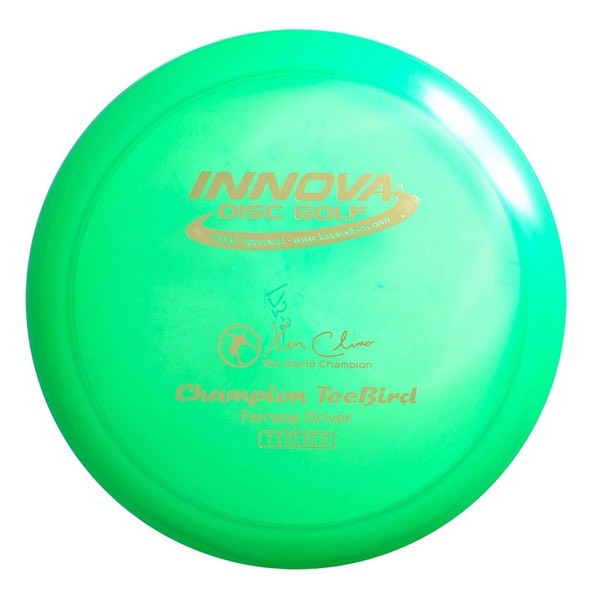
The Innova Teebird has been in continuous production for decades and remains one of the most trusted fairway drivers in disc golf. Its 7/5/0/2 flight rating describes a disc with no high-speed turn and a predictable, moderate fade - which on the course means it flies straight and finishes left reliably, round after round, without surprises. Professional players like Ken Climo carried it to multiple world championships. It remains a bag staple for players from intermediate to professional level.
This review covers everything you need to know: the Teebird's flight characteristics, which plastic to buy, who should throw it, and how it compares to similar fairway drivers.
Innova Teebird - Quick Specs
- Flight Numbers 7 / 5 / 0 / 2 (Speed / Glide / Turn / Fade)
- Disc Type Fairway Driver
- Stability Stable to slightly overstable
- Weight Range 150g-175g (most players throw 165-172g)
- Plastics DX, Pro, Star, Champion, GStar, XT
- Approx. Price $12-20 depending on plastic
- Best For Intermediate to advanced players; straight-to-fade lines, controlled distance
Who Should Throw the Innova Teebird?
The Teebird is best suited for players who have developed enough arm speed to reach a fairway driver's intended flight window - roughly 200+ feet for most recreational players. It is not the most beginner-friendly disc because its 0 Turn rating means it won't give beginners the understable "flip" that keeps discs aloft at lower speeds.
- Beginners: The Teebird will feel overstable and fade out earlier than expected if your arm speed is below the disc's intended speed. Beginners are better served by an understable disc like the Innova Leopard3 first.
- Intermediate players (200-350 feet): This is the Teebird's wheelhouse. At moderate arm speeds, it flies nearly straight with a reliable left finish that's easy to read and plan around. It becomes the fairway driver you can trust in tournaments because you know exactly what it's going to do.
- Advanced players: Carries the Teebird for controlled fairway shots where maximum distance isn't the goal. It handles headwinds better than understable discs and holds hyzer lines reliably for wooded courses.
How the Innova Teebird Flies
The 0 Turn rating is the defining characteristic. Unlike understable discs that arc right during high-speed flight, the Teebird goes where you aim it from release and holds that line until the fade kicks in. Thrown flat on a right-hand backhand, it launches straight, maintains that straight path for most of the flight, and finishes with a 2-rated fade - which is moderate, not dramatic.
The result is a disc that rewards good form. If you release it flat and on the right angle, it flies straight. If you release it nose-up or with an off-axis wobble, the Teebird will show you the error more clearly than an understable disc - which makes it an excellent form-builder as well as a course disc.
In the wind: the Teebird's 0 Turn makes it a solid choice in mild headwinds. It won't flip over like an understable disc when the wind fights it. In strong headwinds, a more overstable disc (like the Innova Firebird) is the better option, but the Teebird handles light-to-moderate headwinds well for its speed class.
Compared to its more understable sibling, the Leopard3: the Teebird is notably more stable. The Leopard3 turns right; the Teebird does not. Think of them as two ends of the intermediate fairway driver spectrum - the Leopard3 for understable shots and the Teebird for straight-to-fade.
Innova Teebird Plastic Types Compared
- DX Plastic: Base plastic. Affordable (~$12-14), soft grip, beats in to become slightly understable over time. Many players intentionally throw a worn DX Teebird for straight shots and a fresh one for reliable fade.
- Star Plastic: Innova's premium grippy blend. Maintains flight characteristics consistently over a full season. Good all-around choice. Around $18-20.
- Champion Plastic: Hard and durable - the most overstable-feeling of the lineup due to its stiffness. Good for players who want the Teebird to hold an overstable line in heavy headwinds. Lasts the longest but grips less in rain.
- Pro Plastic: Mid-range durability between DX and Star. Good for players who want something more durable than DX without paying Star prices.
- GStar: Flexible and grippy, good for cold weather. Flies similar to Star but softer in the hand.
- XT: A blend of DX and Pro that's slightly softer than Pro. Less common but good for players who want a broken-in feel from day one.
Pros
- Straight-to-fade flight that rewards good form
- Handles light headwinds better than understable discs
- Consistent, predictable - no surprises round to round
- Multiple plastic options at every price point
- Proven by professional players across decades of competition
Cons
- Not beginner-friendly - requires enough arm speed to reach intended flight
- Not a distance maximizer - built for control, not raw distance
- Fade can feel "punishing" to players still developing consistent releases
Similar Discs to Consider
- Innova Leopard3 - More understable fairway driver for beginners or for intentional right-curving shots. If the Teebird feels too stable, start here.
- Discraft Buzzz - If you want to drop down to a midrange for more control on shorter holes where the Teebird is too much disc.
- Discraft Zeus - When you're ready to step up to a distance driver. The Zeus has similar reliable fade but at a higher speed rating for more distance potential.
Frequently Asked Questions
What is the difference between the Teebird and the Teebird3?
The Teebird3 (7/5/0/2) shares identical flight numbers with the original Teebird but has a slightly different rim profile that some players find more comfortable. The flight is nearly identical. The original Teebird has a slightly wider rim; the Teebird3 is narrower and beaded. Most players pick based on which feels better in the hand rather than flight differences.
Is the Innova Teebird good for beginners?
Not as a primary driver. The Teebird's 0 Turn means it won't give beginners the understable glide they need to keep shots in the air at lower arm speeds. It will fade out earlier than expected and distances will be shorter than with a beginner-tuned disc. Learn with an understable disc like the Leopard3 first; add the Teebird once you're throwing 200+ feet consistently.
What weight Teebird should I buy?
Most intermediate players do well with 165-172g. Heavier weights (170-175g) fly more overstable and are better for headwinds. Lighter weights (157-165g) fly slightly more understable and are a good option for players still building arm speed who want the Teebird's rim feel without the full overstability at their current speed.