Discraft Buzzz OS Review: The Overstable Buzzz for Wind and Forehand
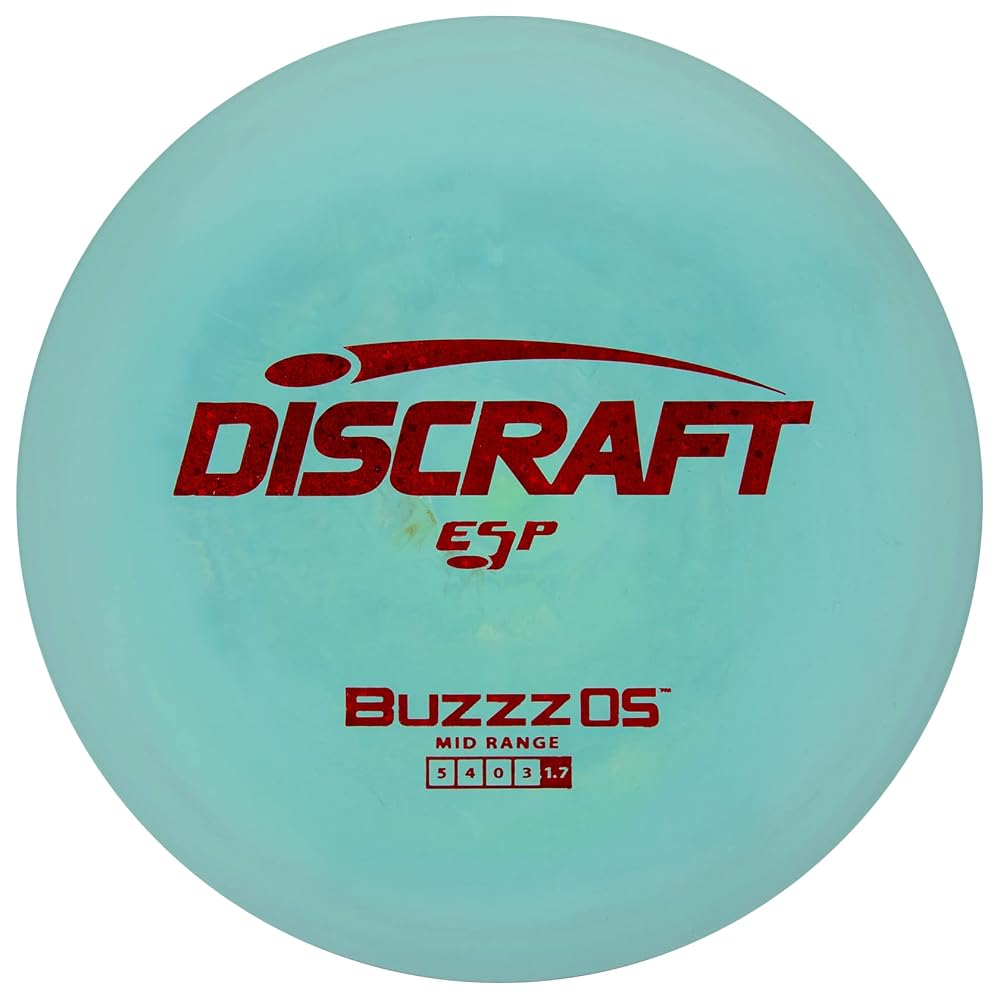
The Discraft Buzzz OS (5/4/0/3) is the overstable version of the best-selling Buzzz. Where the standard Buzzz holds any line and finishes gently (Fade 1), the Buzzz OS resists turning and finishes hard left (Fade 3). The beadless rim is identical to the Buzzz, giving it the same comfortable feel in the hand. Paige Pierce, a five-time PDGA World Champion, uses it as her primary signature midrange. It fills the exact role the Innova Roc3 fills in Innova bags: the overstable headwind midrange and reliable hard-left workhorse.
Discraft Buzzz OS - Quick Specs
- Flight Numbers 5 / 4 / 0 / 3 (Speed / Glide / Turn / Fade)
- Disc Type Midrange (Overstable)
- Stability Overstable
- Weight Range 160g-180g (most players throw 170-177g)
- Plastics Z, ESP, Big Z, Titanium, Jawbreaker, CryZtal
- Approx. Price $16-24 depending on plastic
- Best For Intermediate to advanced; headwinds, forehand midrange, hard left-finishing shots
Who Should Throw the Buzzz OS?
- Beginners: Too much fade early on. Beginners are better served by the standard Buzzz until arm speed and form develop. The Buzzz OS will fade out early and go short.
- Intermediate players: The Buzzz OS earns its bag spot alongside the standard Buzzz. Use the Buzzz for neutral and straight-gliding shots; reach for the OS in headwinds, on forehand midrange throws, and when you need the disc to finish hard left regardless of release.
- Advanced players: A bag staple. The overstability provides a reliable midrange for every situation where neutral won't do. Paige Pierce throws it as her primary midrange because overstable discs in skilled hands produce more consistent results than neutral ones.
How the Discraft Buzzz OS Flies
Identical to the standard Buzzz in feel but dramatically different in flight. The 0 Turn means it goes where you aim without drifting right; the Fade 3 means it finishes with a hard, reliable left hook. Thrown on a flat release, it goes straight to a pronounced curve. Thrown on hyzer, it holds the angle firmly and sets down left. In headwinds, neutral discs that would flip still leave the Buzzz OS largely unaffected.
The beadless design (same as the standard Buzzz) is a key factor. Beaded putters can feel awkward for forehand grips; the Buzzz OS's beadless rim feels natural for forehand midrange throws, making it the go-to disc for forehand shots at midrange distances.
Buzzz OS vs Roc3: same overstable midrange role, different brand. The Buzzz OS has one more Fade (3 vs 2-ish for Roc3) and is slightly more understable at high speed. Many players own one of each - they cover the overstable midrange role from different brands with subtly different character.
Discraft Buzzz OS Plastics Compared
- ESP: Standard. Grippy, durable, consistent Fade 3. Best starting choice. Around $18-22.
- Z: Stiffer, harder, slightly more overstable. Good for maximum headwind resistance.
- Jawbreaker: Very soft, excellent grip. Most understable Buzzz OS plastic. Good for players who want the feel of a putter with overstable midrange flight.
- Titanium: Very durable premium plastic. Consistent overstable flight over a long lifespan.
Pros
- Beadless Buzzz rim - comfortable for forehand throws
- Hard Fade 3 for reliable left-finishing midrange shots
- Wind-resistant - headwinds barely affect it
- Paige Pierce's signature disc - world-champion tested
- Perfect complement to the standard Buzzz
Cons
- Not beginner-friendly - Fade 3 requires arm speed to use correctly
- Very similar role to the Innova Roc3 - redundant if you already own one
- Not for neutral or turnover shots
Frequently Asked Questions
What is the difference between the Buzzz and Buzzz OS?
The standard Buzzz (5/4/-1/1) has slight understability and a gentle fade - it holds lines and finishes softly. The Buzzz OS (5/4/0/3) has zero turn and a hard Fade 3 - it resists turning and finishes aggressively left. The Buzzz is for neutral shots; the OS is for headwinds, forehand throws, and hard-fading approaches. Many players carry both.
Why does Paige Pierce use the Buzzz OS as her primary midrange?
At professional arm speeds, overstable discs provide more predictable results than neutral ones. The Buzzz OS's consistent Fade 3 means Pierce gets the same flight outcome whether she throws it flat, hyzer, or with slight variations in release. For a player who makes her living on consistency, an overstable disc eliminates variables that neutral discs introduce.
Is the Buzzz OS the same as the Buzzz GT?
No. The Buzzz GT has a bead on the rim (the "GT" rim design), which changes the feel significantly and makes it slightly more overstable than the beadless Buzzz OS. Players who prefer a beaded midrange grip prefer the GT; those who want the classic Buzzz feel with more overstability prefer the OS. They occupy similar flight roles but different feel categories.