Dynamic Discs Escape Review: A True, Controllable Fairway Driver
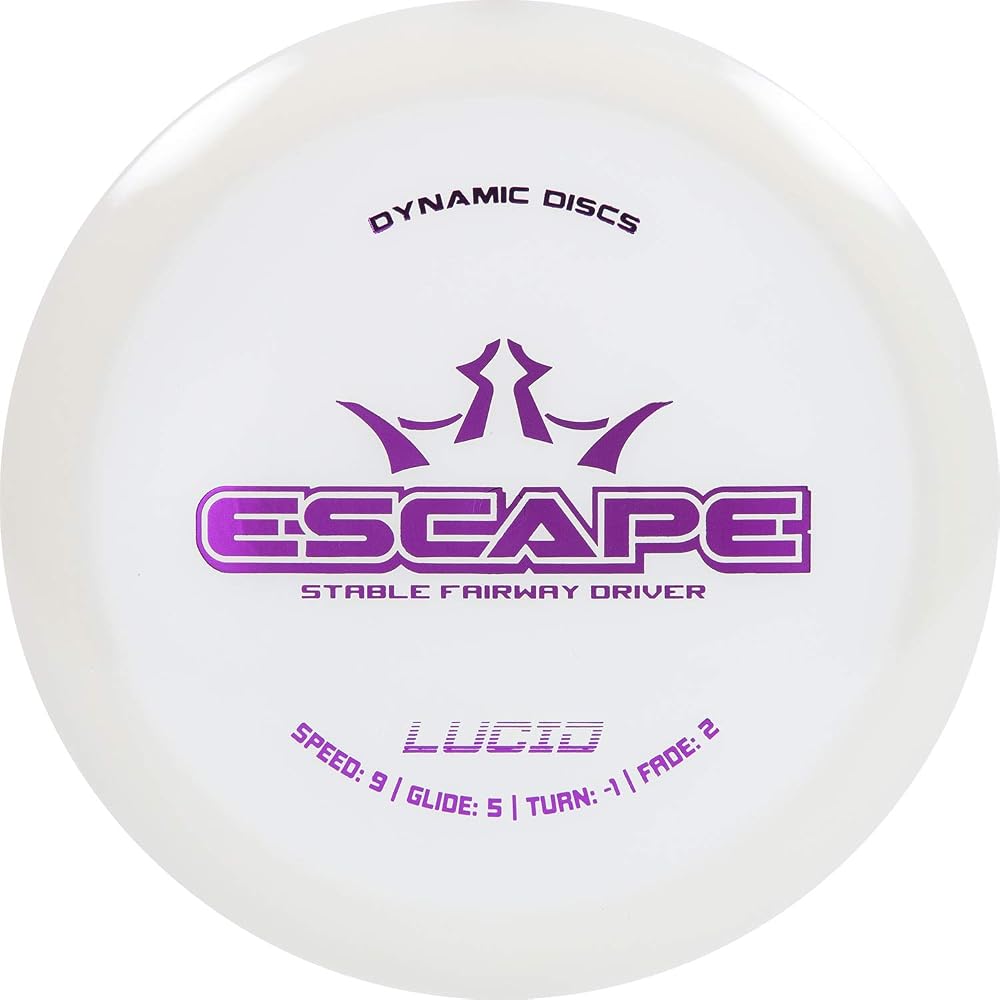
The Dynamic Discs Escape is a stable fairway driver that built its reputation on doing one thing very well: holding a straight, dependable line through tight fairways without surprising the thrower. It is not the flashiest disc in the Dynamic Discs lineup, but it is one of the most trusted, and it has become a staple control driver for players who need to thread shots between trees rather than bomb wide-open distance.
This review covers the Escape's flight in detail - what the 9/5/-1/2 flight numbers actually feel like on the course, which plastics to buy, and whether it belongs in your bag at your current skill level.
Dynamic Discs Escape - Quick Specs
- Flight Numbers 9 / 5 / -1 / 2 (Speed / Glide / Turn / Fade)
- Disc Type Fairway Driver
- Stability Stable, slightly overstable
- Weight Range 150g-175g (most players throw 170-175g)
- Plastics Lucid, Prime Burst, Fuzion, BioFuzion, Supreme, Moonshine
- Approx. Price $15-22 depending on plastic
- Best For Intermediate to advanced players; tight fairway shots and reliable control lines
Who Should Throw the Dynamic Discs Escape?
The Escape rewards players who already have a repeatable form and want a driver that does exactly what they put on it, every time, without guesswork.
- Beginners: The Escape is not the easiest first fairway driver. At lower arm speeds it can fade out early instead of finishing flat, which can be discouraging before your form is consistent. A more understable disc like the Innova Leopard3 is a better starting point.
- Intermediate players: This is the Escape's sweet spot. At moderate arm speeds it flies a true, controlled line with a smooth, predictable fade at the end - exactly the kind of "go where I aim it" driver that intermediate players need for technical, wooded courses.
- Advanced players: Advanced throwers use the Escape for utility shots that need precision over distance - tight gaps, forehand control shots, and tunnel lines where an understable disc would turn over too much.
If you want more glide and forgiveness at lower power, the Latitude 64 River is a strong alternative with a similarly small rim but a more understable flight.
How the Dynamic Discs Escape Flies
The Escape's flight numbers (9/5/-1/2) describe a fast, moderately gliding fairway driver with minimal high-speed turn and a clean, predictable fade. In the air, that translates to a disc that launches on a flat line, holds it through the bulk of the flight, and finishes with a soft, controlled left turn rather than a hard collapse.
On a hyzer release, the Escape holds the angle reliably and finishes on schedule - no extra turn to account for. On a flat or slightly anhyzer release, it stays true longer than many fairway drivers in its speed class, which is the main reason players reach for it on tight, technical holes where a single bad bounce off a tree line ends the hole. Its smaller rim diameter compared to a typical distance driver also makes it easier to control for players with smaller hands or a flatter grip.
In the wind, the Escape's slight overstability is an asset: it resists turning over in headwinds better than a neutral or understable fairway driver, though it is not as overstable as a dedicated headwind disc like the Innova Firebird. For a full breakdown of how stability affects wind performance, see the overstable vs understable guide.
Dynamic Discs Escape Plastic Types Compared
Dynamic Discs releases the Escape across a wide range of plastics. Here's how the most common options differ:
- Lucid: Dynamic Discs' premium tournament plastic. Translucent, grippy in dry and wet conditions, and the standard choice for most players. Around $18-20.
- Fuzion: A blend of Lucid and base plastic with a slightly grittier feel and excellent durability. Flies nearly identical to Lucid at a lower price point. Around $15-17.
- BioFuzion: An eco-friendly, plant-based blend of Fuzion. Slightly less premium feel but flies the same and is a budget-friendly first Escape. Around $13-15.
- Prime Burst: A mid-tier plastic with a swirled, translucent look. Softer than Lucid, slightly more understable out of the box. Good beat-in option.
- Supreme: Dynamic Discs' base plastic, opaque and affordable. Less grip than premium plastics but a solid budget entry point at $10-12.
Recommendation: start with Lucid or Fuzion. Both fly true to the stated numbers and hold up well over hundreds of rounds, which matters for a disc you'll throw on nearly every tight fairway hole.
Pros
- Highly predictable, true flight with minimal surprise turn
- Small rim is comfortable for players with smaller hands
- Resists turning over in headwinds better than neutral fairway drivers
- Wide plastic selection at every price point
- Excellent for tight, wooded fairways and tunnel shots
Cons
- Can fade out early for beginners with slower arm speeds
- Not a distance disc - moderate glide compared to max-glide fairway drivers
- Less forgiving than understable options like the Leopard3 or River
Similar Discs to Consider
If the Escape isn't quite right for what you need, here are the closest alternatives:
- Latitude 64 River - Similarly small rim, but more understable and higher glide, making it more forgiving for beginners and lower arm speeds.
- Innova Teebird - A stable fairway driver with a more neutral flight and slightly more fade; a good comparison point for players deciding between the two workhorse-style drivers.
- Dynamic Discs Maverick - Another small-rim Dynamic Discs fairway driver, slightly more neutral than the Escape and a good option for wooded courses requiring straighter shots.
Frequently Asked Questions
Is the Dynamic Discs Escape good for beginners?
It can be challenging for true beginners. The Escape's slight overstability means it can fade out early at lower arm speeds instead of holding a flat line. Beginners are usually better served by a more understable fairway driver first - see the beginner disc guide.
What weight Escape should I get?
Most players do well with 170-175g, which is the standard range for control fairway drivers. Lighter weights (150-160g) fly more understable and can help players still developing arm speed get a truer flight from the disc.
How does the Escape compare to the Dynamic Discs Maverick?
The Maverick is slightly more neutral with a touch less glide, while the Escape carries a bit more speed and a cleaner, more predictable fade. Both share the same small-rim feel that Dynamic Discs is known for, so the choice often comes down to whether you want a true control flight (Escape) or a slightly more forgiving neutral flight (Maverick).