Kastaplast Falk Review: A True Understable Fairway Driver
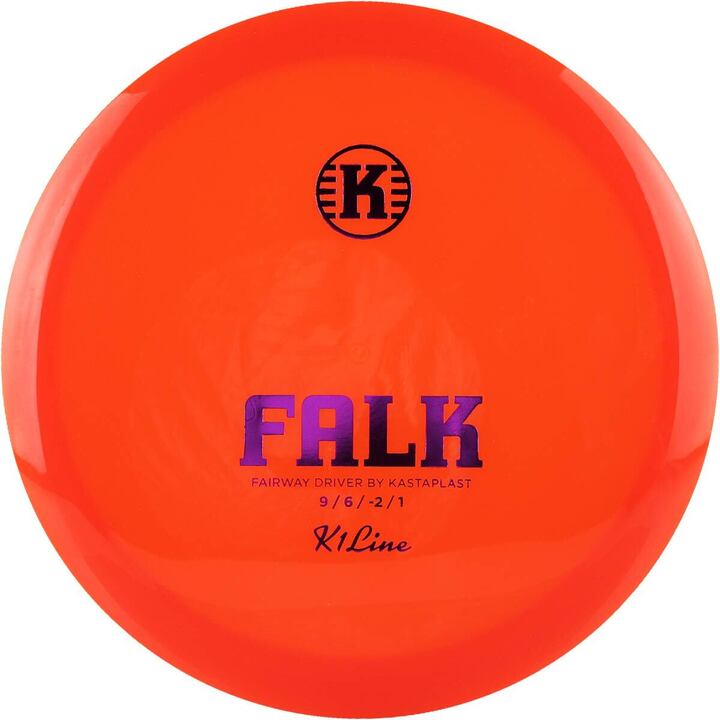
The Kastaplast Falk (9/6/-2/1) is named after the Swedish word for falcon, and Kastaplast built it to be a true understable fairway driver: enough speed and glide to move air, with a reliable -2 Turn that lets lower arm speeds get the disc turning over on its own. It fills a specific gap in Kastaplast's lineup between the more neutral discs in their catalog and a dedicated distance driver, and it has become a go-to first fairway driver for players moving up from midranges.
This review covers who the Falk is actually built for, how those 9/6/-2/1 flight numbers play out in the air, the K1 plastic lineup, and how it stacks up against other understable fairway drivers already in your bag search.
Kastaplast Falk - Quick Specs
- Flight Numbers 9 / 6 / -2 / 1 (Speed / Glide / Turn / Fade)
- Disc Type Fairway Driver
- Stability Understable
- Weight Range 160g-176g (beginners often throw lighter weights)
- Plastics K1, K1 Soft, K1 Hard, K1 Line, K1 Grind, K1 Glow
- Approx. Price $17-22 depending on plastic
- Best For Beginners and intermediate players who need a turnover fairway driver
Who Should Throw the Kastaplast Falk?
The Falk is built around forgiveness at Speed 9 - a speed class that intimidates a lot of newer players. Its -2 Turn does most of the work for you.
- Beginners: The Falk is one of the more approachable Speed 9 drivers available because the -2 Turn lets the disc turn over and glide flat even without a fast, flat release. It's a reasonable second or third driver once a player has a comfortable understable fairway driver already in the bag.
- Intermediate players: This is the Falk's sweet spot. At moderate arm speeds it produces long, controlled turnover lines and holds up well on hyzer-flip releases, where the high-speed turn extends the flat glide phase before the gentle Fade 1 brings it down.
- Advanced players: High arm speeds will turn the Falk over hard and can flip it past flat into a roller if thrown too flat or too anhyzer. Advanced players tend to use it specifically for intentional turnover shots and rollers rather than as a straight-line workhorse.
If you want a fairway driver that holds a straighter line out of the box, a more neutral option like the Innova Teebird or the beadless Latitude 64 Saint Pro will feel more predictable.
How the Kastaplast Falk Flies
The 9/6/-2/1 flight numbers describe a fast, understable fairway driver with real glide. On a flat release at moderate arm speed, the Falk turns right during the high-speed phase of the flight, holds that turn through most of the glide, and only fades back left gently at the very end thanks to the mild Fade 1.
On a hyzer-flip release (disc tilted left at the start), the Falk's -2 Turn works to flatten the disc out during flight, producing long, straight glide phases that are one of the more reliable maximum-distance shots for players who haven't developed high arm speed yet. Thrown with intentional anhyzer, it turns over aggressively and can be used as a roller.
In headwinds, the understability becomes a liability - the wind will push an already-turning disc even further off its intended line, so the Falk is not a headwind disc. In tailwinds it performs well, since the extra lift keeps it turning and gliding rather than fading out early. For more on how turn and fade numbers translate to real flight, see the flight numbers guide and the overstable vs understable guide.
Kastaplast Falk Plastics Compared
Kastaplast makes the Falk across a handful of K1-based blends, all sharing the same base formula with different stiffness and grip characteristics.
- K1: The standard release plastic. Semi-translucent, durable, and a reliable baseline for how the Falk is meant to fly out of the box. Around $18-20.
- K1 Soft: A softer, more flexible version of K1 with extra grip in cold or wet conditions. Flies slightly more understable than standard K1 due to the added flexibility.
- K1 Hard: A stiffer blend that beats in more slowly, holding its out-of-box flight numbers longer than standard K1. A good choice for players who want the Falk's understable character to stay consistent over many rounds.
- K1 Line / K1 Grind: Specialty finishes on the base K1 formula with distinct surface textures and grip feel; flight characteristics track closely with standard K1.
Recommendation: start with standard K1. It's the most widely available and gives the truest read on how the Falk is designed to fly before you branch into softer or stiffer blends.
Pros
- Genuinely understable at Speed 9 - accessible for lower arm speeds
- Excellent hyzer-flip and turnover-shot performance
- Good glide keeps distance up even at moderate power
- Swedish-made K1 plastic has strong grip and durability
- Fills a useful gap for players moving up from midranges
Cons
- Too understable to hold a line in headwinds
- Can flip past flat into a roller if over-thrown or released anhyzer
- Less widely stocked in US retail than Innova or Discraft equivalents
Similar Discs to Consider
If the Falk isn't quite the right fit, here are the closest alternatives:
- Latitude 64 River - Similar understable fairway driver (7/7/-1/1) with more glide and less speed. A gentler option for beginners not yet ready for Speed 9.
- Innova Leopard3 - Slower understable fairway driver (7/5/-2/1) that shares the Falk's -2 Turn but at a more approachable Speed 7.
- Innova Teebird - Neutral-to-stable fairway driver (7/5/0/2) for players who want a straighter line than the Falk provides.
Frequently Asked Questions
Who makes the Kastaplast Falk?
Kastaplast is a Swedish disc golf manufacturer founded by former professional player Kasper Nybo Andersen. The Falk is one of their fairway drivers, named after the Swedish word for falcon, and is molded in their signature K1 plastic family.
Is the Kastaplast Falk good for beginners?
It can be, but it's better as a second or third fairway driver rather than a first disc. The -2 Turn makes Speed 9 more approachable than a stable driver at the same speed, but new players are usually better served starting with a slower understable disc like a midrange or a Speed 7 fairway driver before working up to the Falk.
What weight Falk should I get?
Lighter weights (160-165g) fly more understable and are a good starting point for players still building arm speed. Standard weights (170-176g) hold their line slightly better and are the more common choice once you're consistently getting the disc to turn over as intended.