MVP Relay Review: The Easiest MVP Driver to Throw
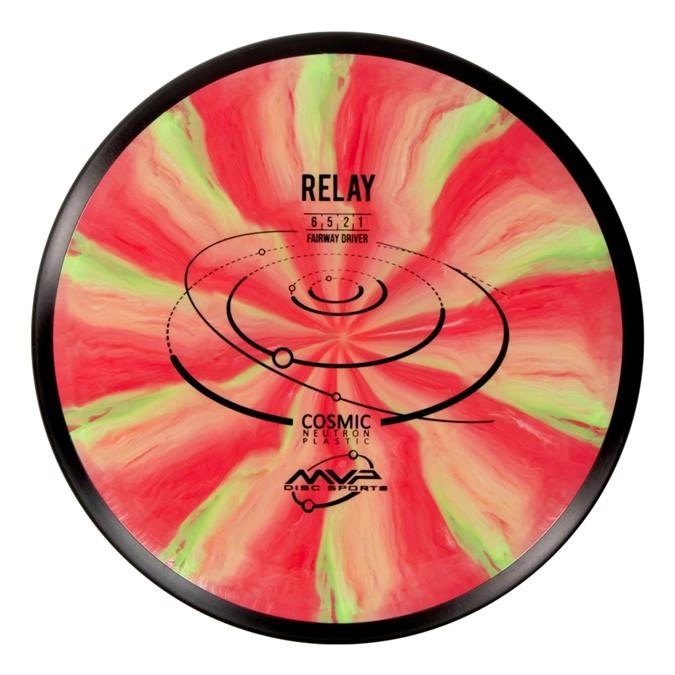
The MVP Relay was built to solve a specific problem: most fairway drivers still ask for more arm speed than a new player has. At Speed 6 with a narrow 16mm rim, the Relay is MVP's slowest driver and one of the easiest control drivers on the market to get airborne, with flight numbers (6/5/-2/1) that describe a gentle, understable flight that holds a straight or slightly turning line rather than fighting the thrower.
This review covers who should actually throw the Relay, how its -2 turn behaves in practice, which plastic to buy first, and how it compares to other beginner-friendly fairway drivers already on the site.
MVP Relay - Quick Specs
- Flight Numbers 6 / 5 / -2 / 1 (Speed / Glide / Turn / Fade)
- Disc Type Fairway Driver
- Stability Understable; turns over easily at moderate power
- Weight Range 150g-175g (most beginners throw 165-175g)
- Plastics Neutron, Cosmic Neutron, Plasma
- Approx. Price $15-24 depending on plastic and weight
- Best For Beginners; the most forgiving driver in the MVP lineup
Who Should Throw the MVP Relay?
A Speed 6 driver with a slim 16mm wing is easy to get up to speed even without much arm strength, which is exactly why the Relay is marketed as MVP's first driver for new players stepping up from a midrange.
- Beginners: This is the Relay's home turf. It needs very little power to fly straight and glide well, and the -2 turn is mild enough that most new throwers won't flip it past a gentle turnover, unlike faster understable drivers that can roll or skip out of control.
- Intermediate players (300-375 feet): The Relay still has a place here as a touch driver for tunnel shots and tight lines, though most intermediate players will find it too slow and too understable to serve as a primary distance disc.
- Advanced players (375+ feet): Full-power throwers will turn the Relay over quickly into a long, flat glider, and some use it deliberately for max-distance turnover shots or rollers. As a go-to driver, though, it's outclassed by faster molds once arm speed is no longer a limiting factor.
How the MVP Relay Flies
With Turn at -2 and Glide at 5, the Relay wants to flatten out and hold its line early in the flight rather than fighting back toward the thrower's hand the way an overstable disc like the Innova Teebird3 does. Thrown flat at a beginner's power, it flies mostly straight with a light finishing fade. Thrown with more speed or on a hyzer angle, it will turn over and glide out flat, which is the classic "hyzer flip" line many players use it for.
The narrow 16mm rim is the other half of the story. It's what lets newer players get the disc up to flying speed without much torque, and it's why MVP markets the Relay as sitting somewhere between a long midrange and a short fairway driver. That narrow profile also means less raw glide than wider-rimmed understable drivers, so the Relay trades a bit of maximum distance for a flight that's easier to read and repeat.
In the wind: because the Relay is already understable, a tailwind will exaggerate the turn and can push it into an unwanted roll if thrown too flat, so a slight hyzer angle helps keep it on line. In a headwind it performs better than most understable discs, since the wind pushes back against that natural turn and can straighten the flight out nicely for intermediate-power throwers.
For a deeper breakdown of how these numbers interact, see the disc golf flight numbers guide and the overstable vs understable guide.
MVP Relay Plastics Compared
- Neutron Plastic: The standard Relay and the one most players should buy first. A premium opaque blend with a neutral, grippy feel and strong durability that shares its overmold technology with MVP's Proton line. Around $18-24 depending on weight.
- Cosmic Neutron: The same Neutron formula with swirled, multi-color accents. Flies identically to standard Neutron; the only difference is cosmetic, so pick this if you want a more eye-catching disc in the bag.
- Plasma: A step down in price with a slightly softer, more translucent feel. A reasonable budget option for trying the mold or keeping a beater Relay around.
Recommendation: start with Neutron or Cosmic Neutron at 165-175g. Both give the truest read on the mold's stock flight, and the heavier end of the weight range holds up better against beginner-speed torque before it starts to feel too flippy.
Pros
- MVP's slowest, easiest-to-throw driver, built specifically for beginners
- Narrow 16mm rim gets up to speed with minimal arm strength
- Mild -2 turn gives a controllable straight flight instead of a wild flip
- Performs well in headwinds, which push back against its natural turn
- Available in three plastics, including a budget-friendly Plasma option
Cons
- Narrow rim means less maximum glide than wider understable fairway drivers
- Advanced throwers will turn it over quickly and outgrow it as a primary driver
- Can roll or skip out of control in a tailwind if thrown too flat
Similar Discs to Consider
- Innova Leopard3 - A faster, wider-rimmed understable fairway driver (7/5/-2/1) with more total glide than the Relay. A natural next step once a player has outgrown the Relay's narrow 16mm profile.
- Prodigy F5 - Nearly identical flight numbers to the Leopard3 (7/5/-2/1) in Prodigy's 400 plastic line, another strong beginner-friendly alternative at Speed 7.
- Latitude 64 River - An even higher-glide understable option (7/7/-1/1) for beginners who want maximum distance with minimal power.
Frequently Asked Questions
Is the MVP Relay good for beginners?
Yes, it's one of the best beginner drivers on the market. At Speed 6 with a narrow 16mm rim, the Relay needs very little arm speed to fly as intended, and its mild -2 turn produces a controllable, mostly straight flight instead of an unpredictable flip.
What's the difference between Neutron and Cosmic Neutron Relay?
Nothing in the flight. Both use the same Neutron plastic formula and fly identically; Cosmic Neutron just adds a swirled, multi-color finish for players who want a more distinctive-looking disc.
What plastic should I buy first?
Neutron or Cosmic Neutron at 165-175g. It's the standard, most widely available Relay plastic, grippy and durable, and the heavier weights hold up best against beginner-speed torque before starting to feel too flippy.