Prodigy F5 Review: An Understable Fairway Driver for Easy Distance
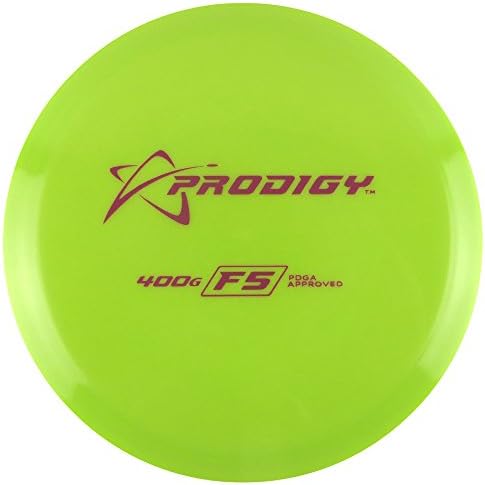
The Prodigy F5 is a Speed 7 fairway driver built to be forgiving at lower arm speeds - its flight numbers, 7/5/-2/1, put it in the same beginner-friendly category as the Innova Leopard3, and the two share identical flight ratings. It's aimed at players who want real distance gains over a midrange without needing a perfect release to get there.
This review covers who gets the most from the F5, how it behaves on the course, which plastic to try first, and how it stacks up against the Leopard3 - the disc most players already compare it to.
Prodigy F5 - Quick Specs
- Flight Numbers 7 / 5 / -2 / 1 (Speed / Glide / Turn / Fade)
- Disc Type Fairway Driver
- Stability Understable (beginner-friendly)
- Weight Range 140g-176g (most beginners do well with 160-170g)
- Plastics 200, 300, 350, 400, 400G, 500, 750
- Approx. Price $13-20 depending on plastic
- Best For Beginners and players with lower arm speeds who want an easy-flying fairway driver
Who Should Throw the Prodigy F5?
The F5 is one of the more accessible fairway drivers in the Prodigy lineup precisely because of its understability - it's designed to stay in the air and keep gliding even when thrown at lower speeds, rather than fading out early the way an overstable driver would.
- Beginners: A strong first fairway driver choice. The understable profile forgives an inconsistent release and keeps the disc flying rather than diving into the ground.
- Intermediate players: Still useful as a dependable turnover disc for shots that need to curve right (RHBH) and hold that line for distance.
- Advanced players: Generally outgrown as a primary driver at high arm speeds, where it will turn over completely - but still handy as a utility disc for tailwind and turnover shots.
How the Prodigy F5 Flies
With a 7/5/-2/1 rating, the F5 launches at an accessible Speed 7, holds solid glide through the middle of its flight, and drifts gently to the right (for RHBH throws) before finishing with a soft, minimal fade. On a flat release, that produces the classic gentle S-curve understable drivers are known for.
Thrown on a hyzer angle, the F5 hyzer-flips reliably - starting left, leveling out flat, and gliding out straight or with a slight right drift. This is the easiest way to get consistent distance from the disc without needing a perfectly flat release, and it's the same shot shape the Innova Leopard3 is known for.
In headwinds, expect more turn than usual - understable discs generally struggle into the wind. In a tailwind, the F5 shines, gliding out for real distance as the wind straightens its natural turn. For more on how turn and fade interact with stability, see the overstable vs understable guide.
Prodigy F5 Plastic Types Compared
- 200 / 300 Plastic: Prodigy's lighter, more affordable blends. Good grip, wear in and become even more understable with heavy use.
- 400 Plastic: The most popular Prodigy plastic. Durable, grips well when wet, holds its flight numbers longer than 300. The standard recommendation.
- 400G Plastic: A firmer, more durable version of 400 that's slower to break in - good if you want the understable profile to stay consistent longer.
- 500 / 750 Plastic: Premium blends with stiffer flight plates and excellent durability, priced higher.
Recommendation: start with 400 or 400G plastic. Both balance grip, durability, and predictable flight while you confirm the F5's turnover profile works for your arm speed.
Pros
- Forgiving understable flight, good first fairway driver
- Reliable hyzer-flip for consistent distance
- Wide range of plastics and weights to fine-tune feel
- Nearly identical flight numbers to the popular Innova Leopard3
Cons
- Turns over completely for players with developed arm speed
- Not ideal in headwinds
- Base plastic (200/300) beats in quickly and becomes very understable
Similar Discs to Consider
- Innova Leopard3 - Nearly identical flight numbers (7/5/-2/1) from a different manufacturer. Pick whichever grip or brand you prefer; they fly almost the same.
- Prodigy F7 - If you want even more glide and turn for maximum-ease distance, see our Prodigy F7 review.
- Prodigy F2 - The overstable opposite. If the F5 turns over too easily for your arm speed, the F2 holds a straighter, more predictable line.
Frequently Asked Questions
Is the Prodigy F5 good for beginners?
Yes. Its understable flight numbers make it one of the more forgiving fairway drivers available, staying aloft and gliding well even at lower arm speeds rather than fading out early.
How does the F5 compare to the Innova Leopard3?
They share the same flight numbers (7/5/-2/1) and fly almost identically. The choice between them usually comes down to plastic grip preference and brand loyalty rather than any meaningful flight difference.
What weight F5 should a beginner buy?
Most beginners do well with 160-170g. Lighter weights fly more understable and stay aloft easier at lower arm speeds, while heavier weights require more power to reach the speed where the glide kicks in.