Discraft Buzzz SS Review: The Understable Buzzz for Beginners
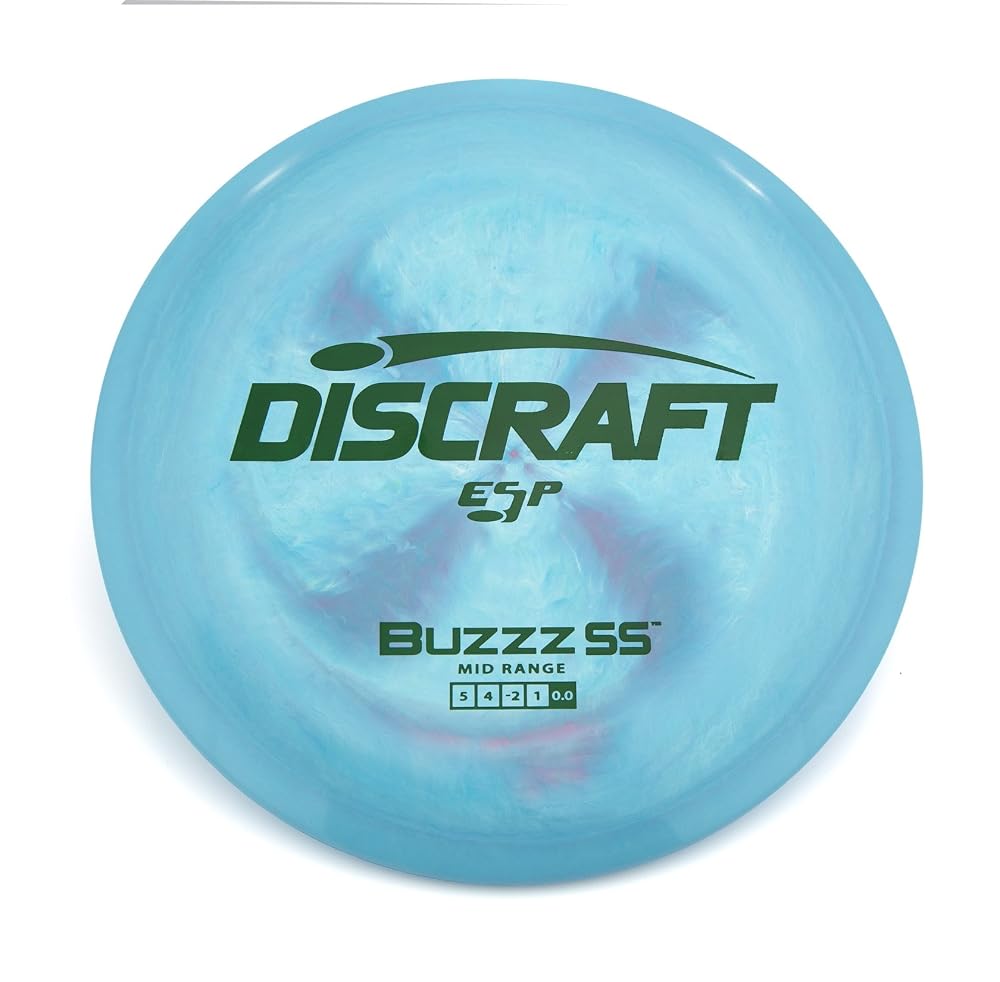
The Discraft Buzzz SS is the understable sibling of the iconic Discraft Buzzz - "SS" standing for "Super Straight." While the standard Buzzz (5/4/-1/1) is one of the most neutral midranges in disc golf, the Buzzz SS (5/4/-2/1) turns more and flies flatter for players who throw at lower arm speeds. It was Eric McCabe's signature disc, and McCabe used it to win the 2010 PDGA World Championship. For beginners and intermediate players who find the standard Buzzz fades out too early, the SS is a natural first choice.
This review covers the Buzzz SS flight in detail - how those 5/4/-2/1 numbers translate to real shots on the course, how it compares to the standard Buzzz and other understable midranges, and which plastic to buy for your skill level.
Discraft Buzzz SS - Quick Specs
- Flight Numbers 5 / 4 / -2 / 1 (Speed / Glide / Turn / Fade)
- Disc Type Midrange
- Stability Understable (turns right for RHBH at most arm speeds)
- Weight Range 160g-180g (beginners: 165-172g; intermediate: 173-177g)
- Plastics ESP, Z Line, Big Z, Jawbreaker Z FLX, Titanium, Tour Series
- Approx. Price $14-22 depending on plastic
- Best For Beginners and intermediate players; understable midrange for straight-to-right lines
Who Should Throw the Discraft Buzzz SS?
The Buzzz SS is designed for players whose arm speed is not yet enough to make the standard Buzzz fly straight - which covers most beginners and many intermediate players.
- Beginners: The Buzzz SS is one of the best first midranges available. At beginner arm speeds, the -2 turn keeps the disc aloft and flying relatively straight rather than fading out hard to the left. New players often find it feels natural and forgiving right away.
- Intermediate players: At moderate arm speeds, the SS produces a gentle right turn that holds through most of the flight, finishing with a soft left hook - the true "super straight" flight it was designed for. A reliable choice for players who want a point-and-shoot midrange for tight lines.
- Advanced players: At high arm speeds the Buzzz SS turns and rolls. It can be used intentionally for hyzer-flip and turnover lines, but most advanced players throwing with power will find the standard Discraft Buzzz or the overstable Buzzz OS more useful day to day.
The one situation where the Buzzz SS is the wrong tool: headwinds. Its understability means it will flip in a headwind. For those situations, the standard Buzzz or a more overstable midrange like the Innova Roc3 will handle the conditions better.
How the Discraft Buzzz SS Flies
The flight numbers 5/4/-2/1 tell the story: moderate speed, solid glide, noticeable high-speed turn to the right, and a gentle fade back left at the end. In the air, the Buzzz SS launches straight, turns gently right during its high-speed phase, then finishes with a subtle left hook - an S-curve that results in very little net deviation from a straight line at the right arm speed.
Compared to the standard Buzzz (5/4/-1/1), the SS turns one unit more. That single unit makes a real practical difference: the Buzzz SS stays aloft longer at lower arm speeds, carries farther without fighting the disc's understability, and can execute intentional right-to-left S-curve shots that the standard Buzzz won't perform as cleanly. For a detailed look at how turn and fade interact in flight, see the flight numbers guide.
In tailwinds, the Buzzz SS works particularly well - understable discs gain effective stability in tailwinds, which brings the SS closer to neutral flight in those conditions. In headwinds, the SS will flip, so it should be avoided or thrown on a strong hyzer angle when the wind is in your face. For a full breakdown of understable disc behavior in wind, see the overstable vs understable guide.
Discraft Buzzz SS Plastics Compared
The Buzzz SS is available in most of Discraft's plastic blends. Here is how the most common options differ:
- Z Line: The standard Buzzz SS plastic. Firm, consistent, and durable. Slightly more understable than ESP at the same weight. A reliable first purchase at around $15.
- ESP: Discraft's premium blend. Grippier than Z Line and slightly more overstable - meaning it turns a bit less than the Z Line version. Around $19-22. Many players prefer ESP for consistency across all weather conditions.
- Big Z: A flexible ESP blend with excellent grip in cold and wet conditions. Flights similarly to ESP but with a softer, more comfortable feel in the hand.
- Jawbreaker Z FLX: The softest option. Outstanding grip and a very comfortable feel for approach shots where you want the disc to land and stop rather than skip. Most understable of the Buzzz SS lineup - best for players who are already comfortable with ESP or Z Line first.
- Titanium / Tour Series: Premium and limited-run plastics. Tour Series versions sometimes feature slightly different flight characteristics. Specialty buys for players who already know the disc well.
Recommendation: start with Z Line or ESP. Z Line gives the most understable flight out of the box; ESP gives slightly more control. Once you know how the SS flies at your arm speed, Big Z is a great upgrade for cold-weather rounds.
Pros
- Flies straight and predictably at lower arm speeds
- Beadless rim feels identical to the standard Buzzz
- Wide plastic selection including premium ESP and soft Jawbreaker Z
- Eric McCabe World Championship pedigree
- Excellent for hyzer-flip shots and tailwind throws
Cons
- Flips in headwinds - not the right disc into the wind
- Advanced players will outgrow it quickly as arm speed develops
- Less versatile than the standard Buzzz for experienced players
Similar Discs to Consider
If the Buzzz SS isn't quite the right fit, here are the closest alternatives:
- Discraft Buzzz - One unit less turn (5/4/-1/1). Once your arm speed develops enough to throw the SS without excessive turning, the standard Buzzz is the natural step up - it holds lines better and handles headwinds more reliably.
- Discraft Comet - More understable midrange (4/5/-2/1). Lower speed than the Buzzz SS, but higher glide. Better for players who want an understable disc with maximum carry distance rather than a controlled S-curve flight.
- Discraft Buzzz OS - The overstable complement (5/4/0/3). If you already have the SS and want a midrange that fights headwinds and finishes hard left, the Buzzz OS is the logical bag companion.
Frequently Asked Questions
What does SS stand for in Discraft Buzzz SS?
SS stands for "Super Straight." The name reflects the disc's design intent: to fly with less fade and more understability than the standard Buzzz, producing a flatter, straighter flight path for players with lower arm speeds. The disc was designed as an understable companion to the original Buzzz, giving beginners and intermediate players the same beadless rim feel with a more forgiving flight.
How is the Buzzz SS different from the standard Buzzz?
The Buzzz SS (5/4/-2/1) has one more unit of turn than the standard Buzzz (5/4/-1/1). In practice, the SS turns more to the right during its flight and finishes with the same gentle Fade 1. For lower arm speeds, the SS stays aloft longer and flies closer to straight. For higher arm speeds, the SS will turn and potentially roll while the standard Buzzz stays on a more predictable neutral line.
Is the Buzzz SS or the standard Buzzz better for beginners?
For most beginners, the Buzzz SS is the better choice. It requires less arm speed to fly correctly and is more forgiving of off-angle releases. Once your form develops and you are throwing consistently in the 200-250 foot range, the standard Buzzz is worth adding - it becomes more versatile as power increases. Many players carry both, using the SS for tailwind and turnover shots and the standard Buzzz for neutral-line approaches.