Discraft Zeus Review: Paul McBeth’s Signature Distance Driver
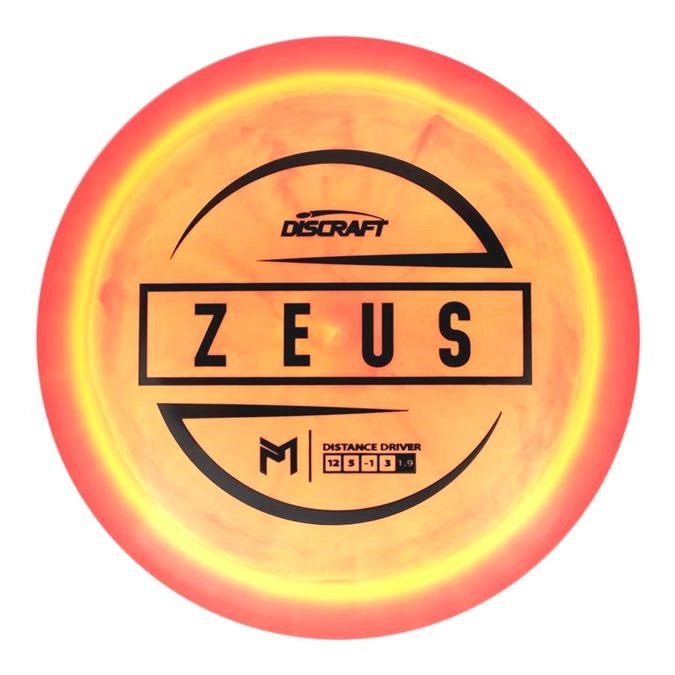
The Discraft Zeus is Paul McBeth's signature distance driver - and McBeth, a six-time PDGA World Champion, has thrown it to win more major events than any other driver in recent history. Its flight numbers (12/5/-1/3) describe a high-speed disc with slight understability at high speeds and a reliable fade at the end - a profile that experienced players call "controllable distance." It goes far and finishes predictably, which is exactly what top-level disc golf requires.
This review covers who should actually throw the Zeus, how it performs at different arm speeds, which plastic to choose, and how it compares to similar distance drivers.
Discraft Zeus - Quick Specs
- Flight Numbers 12 / 5 / -1 / 3 (Speed / Glide / Turn / Fade)
- Disc Type Distance Driver
- Stability Slightly understable at high speeds; overstable finish
- Weight Range 150g-175g (most players throw 168-175g)
- Plastics ESP, Big Z, Z, ESP FLX, Jawbreaker Z, CryZtal Z
- Approx. Price $18-25 depending on plastic
- Best For Intermediate to advanced players; maximum distance with reliable fade
Who Should Throw the Discraft Zeus?
The Zeus is not a beginner disc. A Speed 12 distance driver requires arm speed to reach the intended flight window - most disc golf coaches estimate 55-65 mph minimum for a distance driver to behave as rated. Below that, the disc doesn't have enough speed to activate its intended flight characteristics and will fade out early.
- Beginners: Do not start with the Zeus. At beginner arm speeds, it will feel overstable, fade hard to the left within 150-200 feet, and be difficult to control. Start with an understable fairway driver like the Innova Leopard3, then work up to a fairway driver like the Teebird before moving to distance drivers.
- Intermediate players (300-400 feet): The Zeus starts performing as intended in this range. It produces an S-curve flight - slight right turn at high speed, reliable left fade at the finish. Distance is real and the fade is dependable enough to plan around.
- Advanced players (400+ feet): The Zeus delivers. McBeth throws it 500+ feet in competition. At high arm speeds, the slight understability gives it just enough flip to stay aloft longer before the fade brings it back reliably.
How the Discraft Zeus Flies
At the speeds it was designed for, the Zeus produces what distance driver enthusiasts call a "hyzer-flip to flat" flight naturally - the -1 Turn means it starts turning right slightly at top speed, flattens out in the mid-flight, and then the Fade 3 brings it back reliably left at the end. The total flight arc covers more ground than a purely overstable disc while still delivering a predictable finish.
The high Glide (5) is a significant contributor to the Zeus's distance. That glide, combined with a Speed 12 rim and the slight understability, means the disc stays in the air longer than many overstable distance drivers of similar speed. Every extra foot of airtime translates to more distance on landing.
In the wind: the Zeus is serviceable in mild headwinds but not a dedicated headwind specialist. Its -1 Turn means strong headwinds will flip it more than you'd want. In a headwind, more overstable discs (like the Innova Firebird) perform better. In a tailwind, the Zeus excels - the understability keeps it aloft and the fade brings it back home.
Understanding how speed and stability interact is covered in detail in the disc golf flight numbers guide and the overstable vs understable guide.
Discraft Zeus Plastic Types Compared
- ESP Plastic: The standard Zeus. Grippy, durable, and consistent. Most players' first and primary Zeus. Available in a wide range of colors and weights. Around $20-22. This is the right choice for most players.
- Big Z: More flexible than ESP, very durable. Slightly more understable than ESP Zeus at the same weight. Good for players who want the Zeus to turn a bit more or prefer a less stiff feel in cold weather.
- Z Plastic: Stiffer and harder than ESP. Less grippy but very durable. Flies slightly more overstable due to stiffness. Less popular than ESP but a long-lasting option.
- ESP FLX: Flexible ESP blend. Great grip in wet and cold conditions. Flies similar to standard ESP but won't stiffen up in cold weather. Good for year-round players.
- CryZtal Z / Jawbreaker Z: Specialty runs. CryZtal is translucent and stiff; Jawbreaker is very soft. Mostly collector or specialty buys.
Recommendation: start with ESP at 170-173g. It's the neutral baseline that McBeth designed the disc around, and it's the most widely available.
Pros
- Legitimate maximum distance for players who can reach it
- Slight understability gives controllable S-curve flight
- Reliable Fade 3 finish - predictable landing zone
- High glide contributes meaningful extra airtime
- Paul McBeth's signature disc - proven at the highest level
Cons
- Requires real arm speed to fly correctly - not a beginner disc
- Flips too much in strong headwinds
- Premium plastic prices ($20+) may feel steep for recreational players
Similar Discs to Consider
- Innova Teebird - If the Zeus is too much disc for your current arm speed, the Teebird is a more controllable step down at Speed 7. Same reliable fade character, more accessible speed.
- Innova Destroyer (12/5/-1/3) - Shares identical flight numbers with the Zeus. The choice between Zeus and Destroyer usually comes down to rim feel and plastic preference - both are legitimate top-tier distance drivers.
- Innova Wraith (11/5/-1/3) - One speed class below the Zeus. Slightly more accessible for players in the 280-380 foot range who want Zeus-like flight without the full Speed 12 requirement.
Frequently Asked Questions
How far can the Discraft Zeus fly?
In professional hands (PDGA professional arm speed, optimal release angle), the Zeus can fly 500+ feet. For recreational intermediate players throwing 300-400 feet, realistic distance gains of 30-60 feet over a fairway driver are achievable once the disc is thrown fast enough to reach its intended flight window. The disc itself is not a distance cheat code - arm speed and technique are what convert the Zeus's flight numbers into actual distance.
Is the Discraft Zeus the same as the Innova Destroyer?
They share identical flight numbers (12/5/-1/3) but are different discs from different manufacturers with different rim profiles. The Zeus has a slightly wider rim and a different dome shape. Many players find one more comfortable than the other. Both are considered top-tier distance drivers. Which one you prefer usually comes down to which feels better in your hand and which plastic you like throwing.
What is a good distance to start throwing distance drivers?
Most disc golf coaches recommend waiting until you're consistently throwing fairway drivers 280-320 feet before adding a distance driver to your bag. Below that, a distance driver's high speed rating means it won't reach its intended flight window - it'll just fade out early and go shorter than your fairway driver. If you're not there yet, the Teebird or Leopard3 will serve you better.