Dynamic Discs Raider Review: Overstable Workhorse Distance Driver
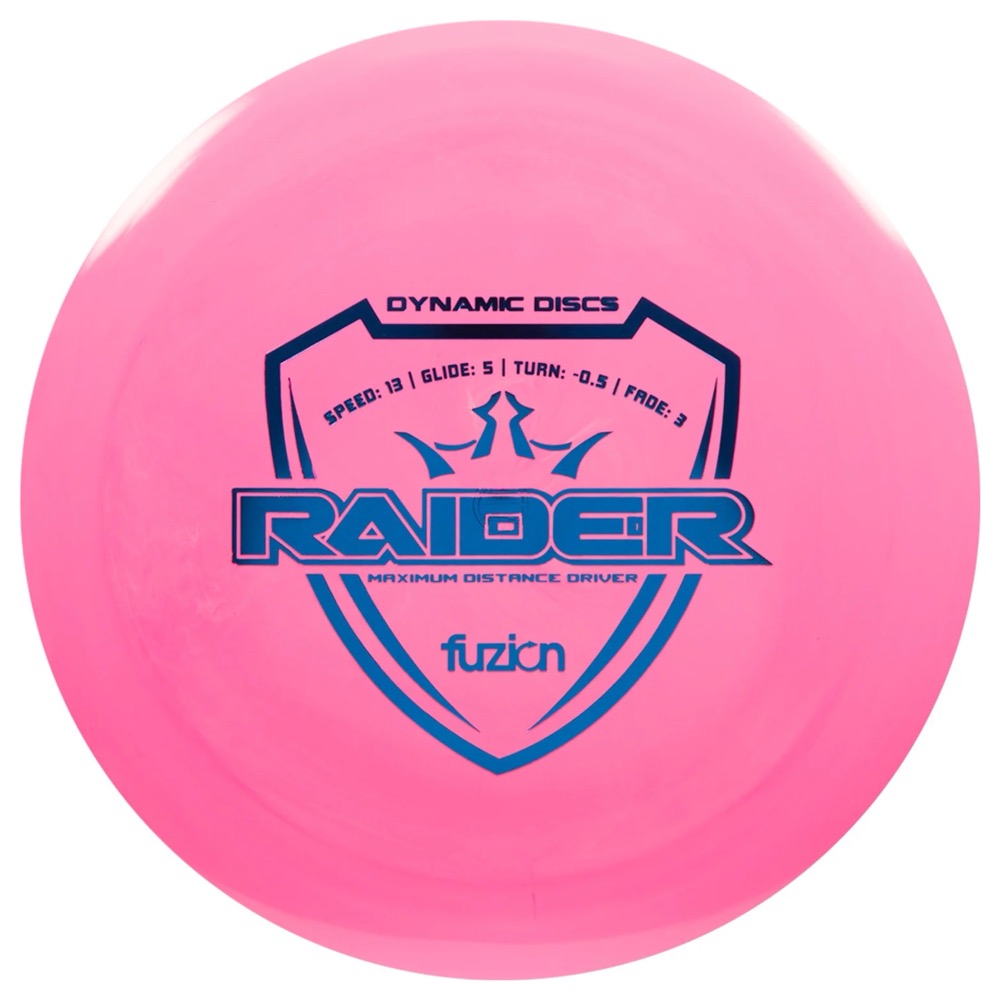
The Dynamic Discs Raider (13/5/-0.5/3) is a Speed 13 overstable distance driver that Dynamic Discs positions between the understable Trespass and the very overstable Enforcer in its own lineup. In practice, that puts the Raider in the same territory as the Innova Destroyer and Discraft Zeus: a beadless, dependable driver that finishes forward with a predictable fade instead of dumping hard left at the end of its flight.
This review covers what those 13/5/-0.5/3 flight numbers feel like in the air, which plastic to buy first, who should (and shouldn't) reach for a Speed 13 driver, and how the Raider stacks up against other workhorse distance drivers.
Dynamic Discs Raider - Quick Specs
- Flight Numbers 13 / 5 / -0.5 / 3 (Speed / Glide / Turn / Fade)
- Disc Type Distance Driver
- Stability Overstable
- Weight Range 165g-176g (most players throw 173-176g)
- Plastics Lucid, Fuzion, BioFuzion, Hybrid
- Approx. Price $15-22 depending on plastic
- Best For Intermediate to advanced; a workhorse overstable driver comparable to the Destroyer
Who Should Throw the Dynamic Discs Raider?
The Raider rewards players who already have enough arm speed to get a Speed 13 disc turning over. Below that threshold, its beadless rim and overstable fade make it fade out early rather than deliver extra distance.
- Beginners: Not recommended as a first distance driver. Without enough power to flatten it out, the Raider will fade left quickly and lose distance compared to a fairway driver. Start with something understable, like the Innova Sidewinder, and work up to Speed 13 discs later.
- Intermediate players (280-380 feet): The Raider starts to make sense once drives are consistently clearing 300 feet. It holds a flat, controlled line and finishes with a moderate fade rather than diving, which makes it more forgiving than many Speed 13 discs at this stage.
- Advanced players: This is the Raider's home. It performs as a genuine workhorse driver: reliable in the wind, predictable off the tee, and capable of covering long, straight-to-fade lines through wooded fairways or open bombs.
How the Dynamic Discs Raider Flies
The 13/5/-0.5/3 combination describes a fast, overstable driver with just enough glide to stay aloft and only a slight amount of high-speed turn. Thrown flat and hard, the Raider launches with minimal turn, holds that line through the meat of its flight, and finishes with a controlled, predictable fade rather than a hard dive.
Because it's beadless (no pronounced lip on the underside of the rim), the Raider sits comfortably in the hand and releases cleanly for players who dislike the grip feel of a heavily beaded rim. That rim shape also contributes to the smooth, forward-finishing flight the Raider is known for compared to sharper-fading overstable discs.
In headwinds, the Raider's overstability keeps it from flipping over, which makes it a dependable choice when conditions get unpredictable. It won't turn over into a roller the way an understable disc would, and it holds its fade even when fighting into the wind. For more on how stability affects flight in different conditions, see the overstable vs understable guide.
Compared to the Innova Destroyer (12/5/-1/3): the Raider is a touch faster (Speed 13 vs 12) with slightly less turn, giving it a flatter, more overstable flight out of the box. Compared to the Dynamic Discs Sergeant (11/4/0/3): the Sergeant is slower and lower-glide, better suited to headwind and forehand shots at shorter range, while the Raider covers more ground for backhand power throwers.
Dynamic Discs Raider Plastics Compared
Dynamic Discs makes the Raider across its full plastic lineup, from budget-friendly base blends to premium translucent runs. Here's how the most common options differ:
- Lucid: Dynamic Discs' premium translucent plastic. Grippy in all weather, holds up to heavy use, and breaks in gradually without going too understable. The best all-around pick. Around $17-20.
- Fuzion: The same base blend as Lucid with recycled content mixed in, giving it a marbled look. Flies the same as Lucid at a slightly lower price. A good value alternative for players who don't need the fully translucent look.
- BioFuzion: The most affordable, eco-friendly plastic in the lineup. Softer and beats in faster than Lucid or Fuzion, which makes it a budget-friendly way to try the mold before committing to premium plastic.
- Hybrid: A blend of Lucid and Dynamic Discs' base plastic. More durable and slightly tackier in cold weather than straight Lucid, at a middle price point.
Recommendation: start with Lucid or Fuzion for the truest, most consistent version of the Raider's stock flight. Save BioFuzion for a beater once your first Raider starts to wear in.
Pros
- Predictable, controlled fade instead of a hard dive at the end of flight
- Beadless rim is comfortable for players who dislike a pronounced lip
- Reliable in headwinds without flipping over
- Plastic options ranging from budget BioFuzion to premium Lucid
- Comparable flight to iconic discs like the Destroyer, often at a lower price
Cons
- Speed 13 requires real arm speed; beginners will lose distance, not gain it
- Not built for turnover or hyzer-flip shots given its overstability
- Fewer specialty/limited plastic runs than Innova or Discraft's flagship molds
Similar Discs to Consider
If the Raider isn't quite the right fit, here are the closest alternatives:
- Innova Destroyer - The most direct comparison. Slightly slower and with a bit more turn (12/5/-1/3), the Destroyer is the disc most players already know that flies closest to the Raider.
- Discraft Zeus - Another Destroyer-comparable driver (12/5/-1/3), Paul McBeth's signature mold. Worth comparing plastics and feel against the Raider before deciding.
- Dynamic Discs Sergeant - A slower, lower-glide overstable driver (11/4/0/3) from the same brand. Better suited to headwinds and forehand shots than the Raider's backhand distance profile.
Frequently Asked Questions
Is the Dynamic Discs Raider good for beginners?
Generally no. At Speed 13 with overstable numbers, the Raider needs real arm speed to fly as intended. Beginners tend to see it fade out early and lose distance compared to a fairway driver. A slower, more understable disc like the Innova Sidewinder is a better starting point.
What is the Dynamic Discs Raider comparable to?
The Raider is most often compared to the Innova Destroyer and Discraft Zeus. All three are beadless, overstable workhorse distance drivers in the Speed 12-13 range with a similar straight-to-fade flight, though the Raider's Speed 13 rating and -0.5 turn give it a slightly flatter, more overstable profile out of the box.
What plastic should I get for the Raider?
Lucid is the best all-around choice: grippy, durable, and the truest version of the stock flight. Fuzion flies identically at a slightly lower price. BioFuzion is the most affordable option and a good way to try the mold before investing in premium plastic.