Westside Sword Review: Speed 12 Distance Driver
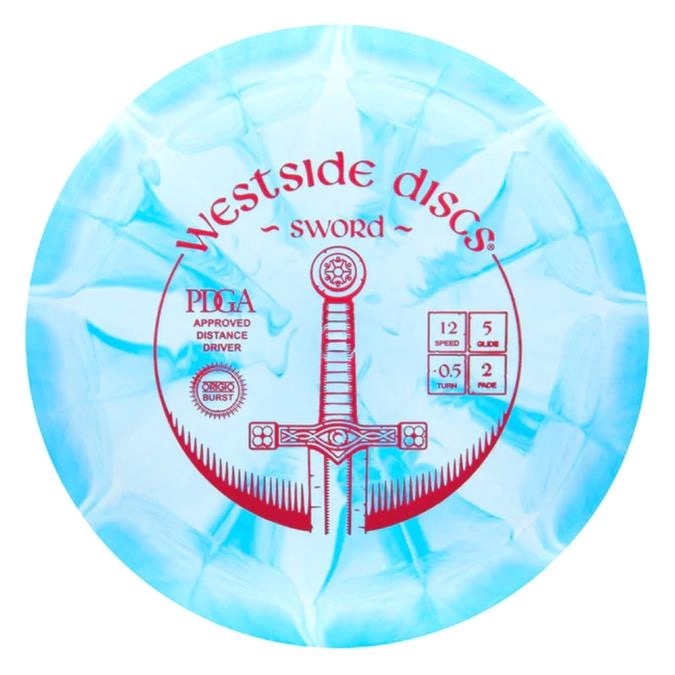
The Westside Sword (12/5/-0.5/2) is a Speed 12 distance driver built to be easy to turn over and hold whatever line it's released on. Westside markets it as one of their most user-friendly high-speed drivers, and the numbers back that up: a slight -0.5 turn and a modest Fade 2 keep it from fighting the thrower the way heavier overstable discs do.
This review covers how the Sword actually flies, why it's become a go-to forehand disc for a lot of players, which plastic to grab first, and how it stacks up against the other Speed 12-13 drivers already covered on this site.
Westside Sword - Quick Specs
- Flight Numbers 12 / 5 / -0.5 / 2 (Speed / Glide / Turn / Fade)
- Disc Type Distance Driver (Stable)
- Stability Stable
- Weight Range 145g-176g (most players throw 170-176g)
- Plastics VIP, Tournament, Origio Burst
- Approx. Price $18-21 depending on plastic
- Best For Intermediate and advanced players who want a straight, predictable driver for backhand and forehand shots alike
Who Should Throw the Westside Sword?
A Speed 12 rim asks for more snap than a fairway driver but rewards the effort with a flight that holds its line instead of turning over or dumping into an early fade.
- Beginners: Still a stretch. Speed 12 needs more rim speed than most new throwers have developed, and a Speed 7-9 fairway driver will cover more usable distance in the meantime.
- Intermediate players (300-380 feet): A strong fit. The Sword's mild turn and light fade make it one of the more forgiving Speed 12 drivers to learn on, especially on forehand shots where its natural stability shines.
- Advanced players: A dependable straight-line workhorse. It won't out-distance a maximum-speed driver like the Latitude 64 Ballista, but it lands more predictably in the fairway on shots that don't need every last foot.
How the Westside Sword Flies
The 12/5/-0.5/2 combination describes a driver that slices through the air on a controlled, straight line before finishing with a gentle Hyzer fade. The -0.5 turn is just enough to flatten the flight out at high speed without ever threatening to roll over, which is exactly why Westside pitches it as user-friendly: there's very little window for the disc to do something a thrower doesn't expect.
For more on how turn and fade interact at different arm speeds, see the overstable vs understable guide. If you're still learning what the four flight numbers mean, start with the flight numbers guide.
Compared to the Dynamic Discs Trespass (12/5/-0.5/3): both share the same speed and turn, but the Trespass carries a full point more fade, so the Sword finishes flatter and straighter while the Trespass holds a firmer line at the end. Compared to the Discraft Force (12/5/0/3), a disc with zero turn and more fade, the Sword is the more turn-over-friendly option of the two and a common forehand pick for that reason. Compared to the Innova Wraith (11/5/-1/3), a full speed slower with more turn and fade, the Sword flies faster and straighter once an arm has the speed to unlock it.
Westside Sword Plastics Compared
Westside releases the Sword across three main plastic grades, from a grippy budget blend up to a premium, long-lasting option:
- VIP Plastic: Westside's premium, translucent blend. Holds the stock 12/5/-0.5/2 flight the longest and resists wear well, making it the best starting point for most players. Around $20-24.
- Tournament Plastic: Westside's mid-tier blend, a step down in durability from VIP but still solid, with a slightly grippier feel out of the box. A reasonable middle ground on price.
- Origio Burst: Westside's budget baseline plastic. Grippy immediately and beats in faster than VIP, which lets the disc season toward a slightly more understable flight sooner. The most affordable way into the mold.
Recommendation: start with VIP Plastic for the truest, longest-lasting version of the stock flight. Reach for Origio Burst if budget matters more than longevity, or Tournament Plastic as a middle-ground pick.
Pros
- One of the more user-friendly Speed 12 drivers on the market
- Mild turn and light fade keep the flight predictable start to finish
- Genuinely good on forehand shots, not just backhand
- VIP Plastic holds the stock numbers for years of regular play
- Budget Origio Burst option makes it an easy first Speed 12 to try
Cons
- Still requires more arm speed than a fairway driver to fly correctly
- Less overall distance ceiling than faster, more overstable Speed 13-14 drivers
- Fade 2 finish is light enough that hyzer-flip shots can turn over more than expected
Similar Discs to Consider
If the Sword isn't quite the right shape for your arm, here are the closest alternatives already covered on this site:
- Dynamic Discs Trespass - Same Speed 12 and turn, with a full point more fade for a firmer finish.
- Discraft Force - Same Speed 12 with zero turn and more fade, a stronger anti-turnover option.
- Innova Wraith - A Speed 11 driver with more turn and fade, an easier disc to get into the air at lower arm speeds.
Frequently Asked Questions
Is the Westside Sword good for beginners?
Not ideal as a first driver. A Speed 12 rim needs more rim speed than most new throwers have, and a slower fairway driver will cover more usable distance in the meantime. It becomes a strong pick once a player reaches an intermediate arm speed.
What plastic should I get for the Sword?
VIP Plastic is the best starting point for the truest, longest-lasting version of the stock flight. Origio Burst is the budget option that beats in faster, and Tournament Plastic sits in between on price and durability.
Is the Westside Sword good for forehand throws?
Yes. Its stable, predictable turn and light fade make it a common forehand pick, since the disc holds its line well without the extra fade of a more overstable driver.