Discraft Force Review: Discraft’s Fastest Overstable Distance Driver
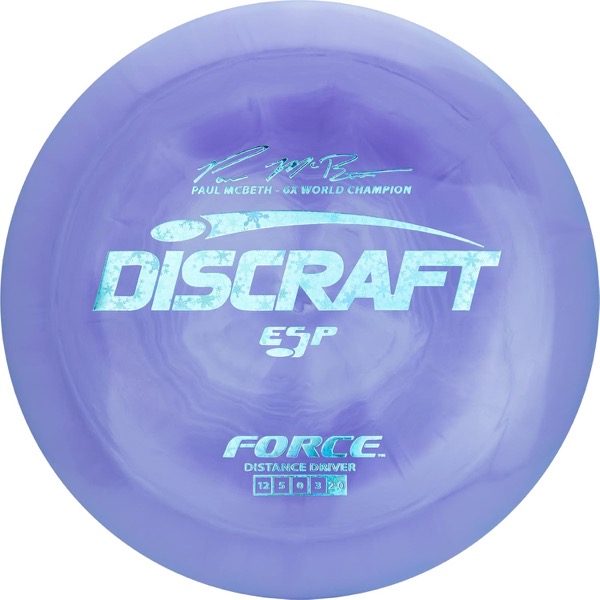
The Discraft Force is built for one job: maximum distance with a fade you can count on. At Speed 12 with a Discraft stability rating of 2.0, it's one of the fastest overstable drivers Discraft makes, and its flight numbers (12/5/0/3) describe a disc that holds its line at high speed and then finishes hard left (for a right-hand backhand throw) rather than turning over. Power throwers who fight wind or want a disc that never flips reach for the Force.
This review covers who should actually throw the Force, how its 0-turn flight behaves in practice, which plastic to buy first, and how it compares to Discraft's other big-name distance drivers.
Discraft Force - Quick Specs
- Flight Numbers 12 / 5 / 0 / 3 (Speed / Glide / Turn / Fade)
- Disc Type Distance Driver
- Stability Very overstable; no high-speed turn
- Weight Range 150g-174g (most players throw 170-174g)
- Plastics Pro-D, Elite Z, ESP, Titanium
- Approx. Price $14-25 depending on plastic
- Best For Advanced players and power throwers; maximum distance with a dependable fade
Who Should Throw the Discraft Force?
A Speed 12 driver with zero high-speed turn needs real arm speed to reach the distance it's rated for. Without enough power behind it, the Force just fades out early and lands short of a fairway driver thrown at the same speed.
- Beginners: Skip the Force for now. At beginner arm speeds it will hook hard left within the first 150-200 feet and be difficult to control. Start with something forgiving like the Innova Leopard3, then build up through a fairway driver like the Teebird.
- Intermediate players (300-375 feet): The Force starts to make sense here. Because Turn is 0, it won't flip over even if you can't quite max it out - it just flies a bit shorter and fades a bit sooner. That predictability makes it a safer overstable option than discs with negative turn.
- Advanced players (375+ feet): This is where the Force earns its reputation. Full-power throwers get genuine distance out of it, and it holds up in headwinds better than almost anything else in the Discraft lineup because there's no turn to fight against the wind.
How the Discraft Force Flies
With Turn at 0, the Force doesn't get the high-speed flip that discs like the Discraft Zeus or Innova Destroyer use to add extra glide distance. Instead it flies essentially straight and flat at top speed, holds that line longer than most Speed 12 drivers, and then the Fade 3 pulls it back left as it slows down. The result is a shorter, more predictable S-curve than an understable driver, and a much more reliable finish.
The wide 2.3cm rim is a big part of that character. It's what lets the Force stay overstable through its entire flight instead of losing stability as it slows, which is exactly what makes it a go-to disc for forehand throwers and anyone who needs a big, controlled fade at the end of the flight.
In the wind: this is where the Force separates itself from turnover-prone distance drivers. Because it has no turn to begin with, headwinds can't flip it - they just make the fade come in a little earlier. That makes it one of the more dependable headwind bombers in this speed class. In a tailwind it still performs fine, though discs with some built-in turn (like the Zeus) will glide a bit further when the wind is at your back.
For a deeper breakdown of how these numbers interact, see the disc golf flight numbers guide and the overstable vs understable guide.
Discraft Force Plastics Compared
- ESP Plastic: The standard Force and the one most players should buy first. Grippy, durable, and holds its overstable flight for a long time before beating in. Available in the standard run and in the McBeth 6X Signature Series stamp. Around $18-23.
- Elite Z: Stiffer and harder than ESP, with less grip but excellent durability. Flies noticeably more overstable than ESP at the same weight, which some power throwers prefer for maximum fade.
- Titanium: Discraft's premium translucent blend. Extremely durable and holds its dome and flight characteristics longer than any other Force plastic, at a modest price premium.
- Pro-D: The budget option. Softer and less durable, and it will beat in (turn less overstable) faster than the other plastics. A reasonable way to try the mold cheaply or keep a beater in the bag.
Recommendation: start with ESP at 170-174g. It's the most widely available plastic and gives the truest read on the mold's stock flight before you decide whether you want something stiffer (Elite Z) or longer-lasting (Titanium).
Pros
- Discraft's fastest flying overstable driver - real distance for power throwers
- Zero high-speed turn means it never flips, even in strong headwinds
- Reliable Fade 3 finish that's easy to plan approach shots around
- Wide 2.3cm rim holds the overstable line through the whole flight
- Available in four plastics, including a McBeth 6X Signature Series ESP stamp
Cons
- Requires real arm speed to reach its intended flight window - not a beginner disc
- No turnover phase means less total glide than understable Speed 12 drivers in a tailwind
- Some experienced reviewers note mold consistency can vary between individual discs
Similar Discs to Consider
- Discraft Zeus - Same Speed 12 / Glide 5 profile but with -1 Turn instead of 0, giving the Zeus a bit more high-speed glide and total distance for players who can reach it. The Force trades that extra glide for a more predictable, no-flip flight.
- Innova Destroyer - Innova's benchmark distance driver at 12/5/-1/3. Like the Zeus, it has slight high-speed turn where the Force has none, making the Force the more overstable, headwind-friendly choice between the two.
- Dynamic Discs Raider - A step up in speed (13/5/-0.5/3) for players who have maxed out the Force and want even more distance from a similarly overstable driver.
Frequently Asked Questions
Is the Discraft Force good for beginners?
No. At Speed 12 with zero high-speed turn, the Force needs a fast, powerful throw to fly as intended. Beginners will typically see it fade hard left within the first 150-200 feet instead of reaching the distance the disc is rated for. A slower, more forgiving fairway driver is a better starting point.
What's the difference between the Discraft Force and the Discraft Zeus?
Both are Speed 12, Glide 5, Fade 3 drivers, but the Zeus has -1 Turn while the Force has 0. That extra turn gives the Zeus a bit more high-speed glide and total distance for players who can reach it, while the Force's zero-turn flight is more predictable and holds up better in headwinds since there's no turnover phase for the wind to exploit.
What plastic should I buy first?
ESP. It's the standard, most widely available Force plastic, grippy in most conditions, and durable enough to hold its stock overstable flight for a long time before it starts to beat in. Once you know how you like the mold, Elite Z (stiffer, more overstable) or Titanium (premium, longest-lasting) are good next steps.