Prodigy M2 Review: A Reliable, Slightly Overstable Midrange
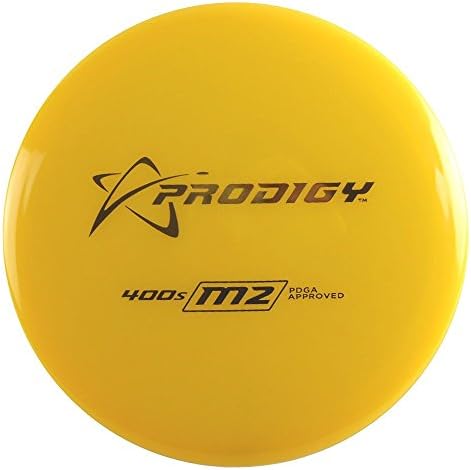
The Prodigy M2 is a slightly overstable midrange built for consistency - its flight numbers, 5/4/0/2, describe a disc with no high-speed turn and a dependable finishing fade, which adds up to a straight, predictable flight that holds up well in the wind. It's a natural comparison to the Discraft Buzzz, disc golf's best-selling midrange, but with a bit more built-in overstability.
This review covers who should throw the M2, how it flies, which plastic to try first, and how it stacks up against the Buzzz.
Prodigy M2 - Quick Specs
- Flight Numbers 5 / 4 / 0 / 2 (Speed / Glide / Turn / Fade)
- Disc Type Midrange
- Stability Slightly overstable
- Weight Range 150g-180g (most players throw 175-180g)
- Plastics 300, 400, 400G, 500, 750
- Approx. Price $14-20 depending on plastic
- Best For All skill levels; a dependable, wind-resistant workhorse midrange
Who Should Throw the Prodigy M2?
Like most well-designed midranges, the M2 works across a wide range of arm speeds - its zero turn rating means it won't flip over unpredictably even at lower power, while its fade keeps shots landing where you expect them to.
- Beginners: A safe, predictable midrange. Won't turn over on you, and the fade is mild enough not to punish an inconsistent release.
- Intermediate players: Useful as a control disc for tight, wooded fairways and approach shots that need a reliable finish.
- Advanced players: A dependable headwind midrange - the slight overstability holds up better than a neutral midrange when the wind picks up.
How the Prodigy M2 Flies
The 5/4/0/2 rating describes a disc that launches straight, holds that line through the middle of its flight thanks to the zero turn rating, and finishes with a moderate, predictable fade. There's no early turnover to account for, which makes the M2 an easy disc to trust on tight lines around obstacles.
Thrown on a hyzer angle, the M2 holds the angle longer than a more understable midrange would before gradually fading back left. On an anhyzer, it holds that line respectably without flipping and turning over the way a neutral or understable midrange might.
In the wind, the M2's slight overstability is an asset - it resists turning over in headwinds better than a neutral midrange like the Discraft Buzzz, making it a solid choice to keep in the bag for breezy rounds. For more on how turn and fade drive these differences, see the flight numbers guide.
Prodigy M2 Plastic Types Compared
- 300 Plastic: Prodigy's base blend. Grippy and affordable, wears in and becomes more understable with heavy use - a fine first M2.
- 400 Plastic: The most popular Prodigy plastic. Durable, grips well when wet, and holds its overstable flight numbers longer than 300. The standard recommendation.
- 400G Plastic: A firmer version of 400 that's slower to break in - good if you want the fade to stay reliable for a long time.
- 500 / 750 Plastic: Premium blends with stiffer flight plates and excellent durability, priced higher.
Recommendation: start with standard 400 plastic. It balances grip, durability, and flight consistency, and it's the easiest to find in most weights.
Pros
- Predictable, reliable flight across skill levels
- Holds up well in headwinds compared to neutral midranges
- Zero turn rating means no surprise turnover
- Solid choice for tight, wooded fairway lines
Cons
- Less distance-friendly than a more understable midrange for low arm speeds
- Base plastic wears in and softens the overstable flight over time
- Not as versatile as a fully neutral midrange for players who want maximum shot-shaping range
Similar Discs to Consider
- Discraft Buzzz - The closest comparison. The Buzzz (5/4/-1/1) is more neutral with less fade, while the M2 leans more overstable in its finish.
- Innova Roc3 - Another slightly overstable midrange option with a similar reliable, controlled flight.
- Prodigy F5 - If you want more distance than a midrange offers and are ready to step up to a fairway driver.
Frequently Asked Questions
Is the Prodigy M2 good for beginners?
Yes. Its zero turn rating means it won't flip over unexpectedly, and the fade is mild enough that new players can throw it with confidence while their form is still developing.
How does the Prodigy M2 compare to the Discraft Buzzz?
Both are Speed 5 midranges, but the Buzzz (5/4/-1/1) is more neutral with a touch of understable turn and minimal fade, while the M2 (5/4/0/2) holds a straighter line with a stronger, more predictable finish - making the M2 a slightly better choice for windy rounds and the Buzzz a bit more forgiving at low arm speeds.
What weight M2 should I get?
Most players do well with 175-180g, the standard tournament-weight range for midranges. Lighter weights fly a bit more understable, which can help players with lower arm speeds get more out of the disc.